
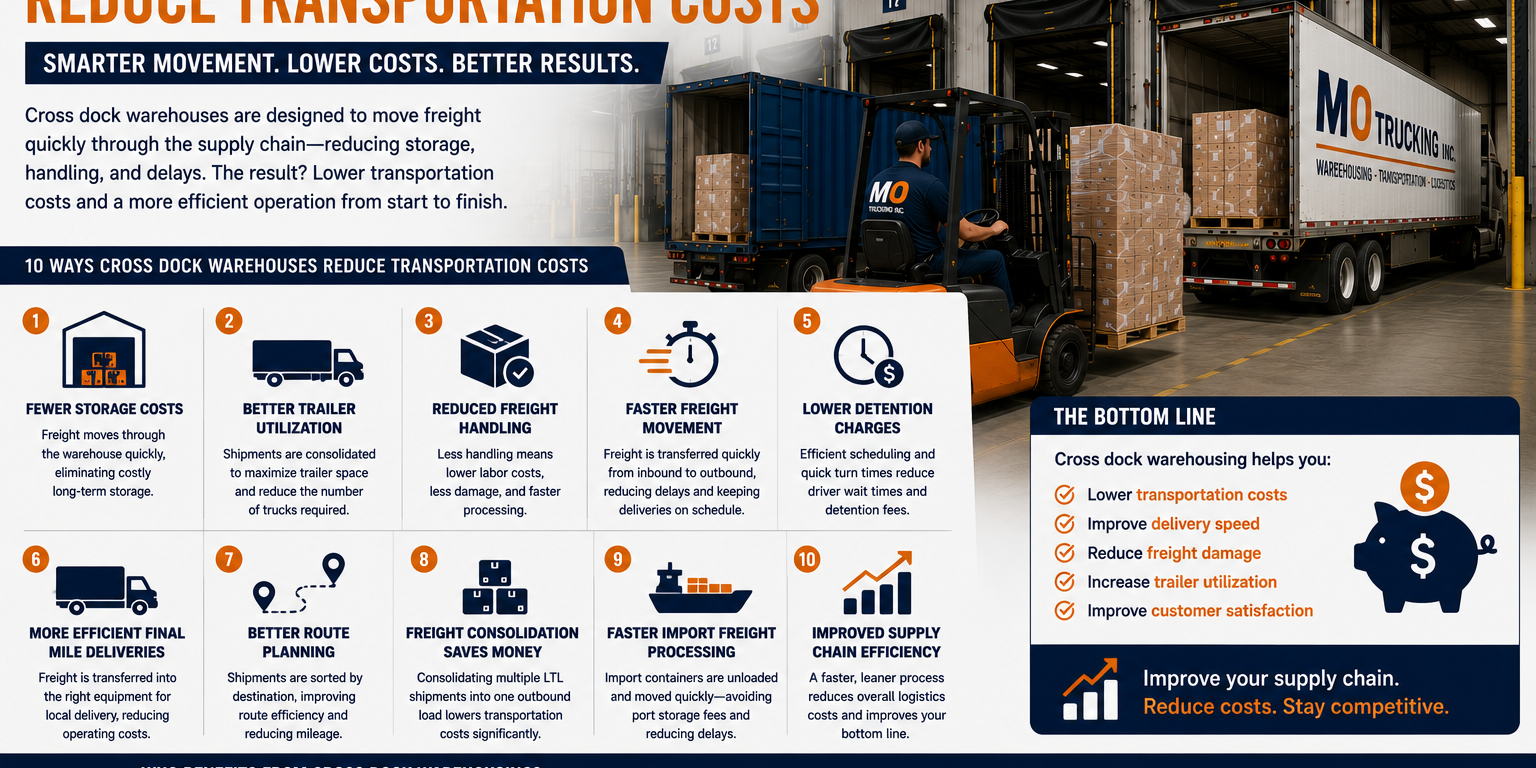
How Cross Dock Warehouses Reduce Transportation Costs: 10 Ways Businesses Save Money
Transportation costs continue to rise due to fuel prices, labor shortages, equipment costs, and increasing customer expectations for faster delivery. As a result, many businesses are looking for ways to improve efficiency without sacrificing service.
One of the most effective solutions is using a Cross Dock Warehouse New York. Instead of storing freight for extended periods, cross dock warehouses keep products moving through the supply chain, helping businesses reduce transportation expenses while improving delivery performance.
Whether you’re an importer, manufacturer, retailer, freight broker, or third-party logistics provider (3PL), understanding how cross dock warehousing lowers transportation costs can help you make smarter logistics decisions.
What Is Cross Dock Warehousing?
Cross dock warehousing is a logistics process where freight is received, inspected if necessary, sorted, and quickly transferred to outbound transportation instead of remaining in warehouse storage.
Because freight spends very little time inside the warehouse, businesses eliminate unnecessary handling, reduce storage costs, and improve transportation efficiency.
- Fewer Storage Costs
Traditional warehouses charge for storing inventory over time.
Cross dock warehouses minimize or eliminate long-term storage because freight is transferred directly to outbound transportation.
Lower storage costs contribute directly to lower overall transportation expenses.
- Better Trailer Utilization
One of the largest transportation expenses is moving partially filled trailers.
Cross dock warehouses help combine shipments and maximize trailer capacity.
Benefits include:
- Fewer trucks required
- Better cube utilization
- Lower cost per shipment
- Reduced empty trailer space
Fully utilized trailers reduce the cost of every delivery.
- Reduced Freight Handling
Every time freight is unloaded, stored, moved, and reloaded, labor costs increase.
Cross dock operations reduce unnecessary handling by minimizing the number of times freight is touched.
Benefits include:
- Lower labor costs
- Reduced freight damage
- Faster processing
- Improved efficiency
- Faster Freight Movement
Time is money.
Cross dock warehouses move freight quickly from inbound transportation to outbound trucks.
Instead of waiting in storage, shipments continue moving toward customers almost immediately.
This reduces transportation delays while improving delivery performance.
- Lower Detention Charges
Drivers waiting for freight can generate expensive detention charges.
Efficient cross dock scheduling reduces waiting time by coordinating inbound and outbound shipments more effectively.
This benefits both carriers and customers.
- More Efficient Final Mile Deliveries
Many businesses use cross dock facilities to transfer freight into equipment better suited for local deliveries.
Examples include:
- Liftgate trailers
- Straight trucks
- Local delivery vehicles
- Dedicated delivery trucks
Using the right equipment helps reduce operating costs while improving delivery efficiency.
-
Better Route Planning
Cross dock warehouses allow freight to be organized by destination before outbound transportation.
Shipments can be grouped by:
- Customer
- Delivery route
- Geographic area
- Purchase order
- Retail location
Better planning reduces mileage while increasing delivery efficiency.
-
Freight Consolidation Reduces Shipping Costs
Cross dock facilities often consolidate freight arriving from multiple suppliers into one outbound shipment.
This reduces:
- Transportation costs
- Number of deliveries
- Driver hours
- Fuel usage
- Empty trailer space
Freight consolidation is one of the biggest contributors to transportation savings.
-
Faster Import Freight Processing
Imported freight arriving through the Port of New York and New Jersey often benefits from cross dock operations.
Instead of remaining at the port or entering long-term storage, freight can be:
- Unloaded
- Inspected
- Sorted
- Consolidated
- Reloaded
- Delivered
This helps reduce port storage charges while improving delivery speed.
-
Improved Supply Chain Efficiency
Every benefit listed above contributes to one larger advantage:
A more efficient supply chain.
When freight moves faster, businesses experience:
- Lower transportation costs
- Better inventory flow
- Improved customer service
- Higher productivity
- Greater profitability
Which Businesses Benefit Most?
Cross dock warehousing helps businesses across many industries, including:
- Importers
- Manufacturers
- Retailers
- Freight brokers
- Third-party logistics providers
- Food distributors
- Medical suppliers
- Construction suppliers
- Trade show companies
- E-commerce businesses
Any business moving freight quickly can benefit from lower transportation costs through cross docking.
Frequently Asked Questions
Does cross docking really reduce transportation costs?
Yes. Cross docking reduces storage expenses, labor costs, freight handling, detention charges, and transportation inefficiencies.
Does cross docking reduce freight damage?
Generally, yes. Since freight is handled fewer times, there is less opportunity for product damage.
Is cross docking only beneficial for large companies?
No. Businesses of all sizes can reduce logistics costs by improving freight movement and reducing unnecessary storage.
Can imported freight be cross docked?
Absolutely. Many import shipments move directly from ocean containers into outbound transportation without entering long-term storage.
Does freight consolidation reduce transportation costs?
Yes. Consolidating multiple shipments into one outbound load improves trailer utilization while lowering transportation expenses.
Is cross docking good for LTL shipments?
Yes. Many companies consolidate LTL freight through cross dock operations before final delivery.
Final Thoughts
Reducing transportation costs isn’t always about negotiating lower freight rates. Often, the greatest savings come from improving the way freight moves through your supply chain.
Cross dock warehousing reduces storage, minimizes handling, improves trailer utilization, speeds up deliveries, and creates a more efficient transportation process from start to finish.
For businesses operating throughout New York and the Northeast, cross dock warehousing is one of the most effective strategies for lowering logistics costs while improving customer service.
Ready to Reduce Your Transportation Costs?
If you’re looking for ways to improve your logistics operation and reduce transportation expenses, Request a Free Quote and our warehouse team will develop a solution tailored to your freight.
Have questions about cross docking, transportation, or warehouse services? Contact Our Warehouse Team today to discuss your operation and discover how MO Trucking can help streamline your supply chain.