
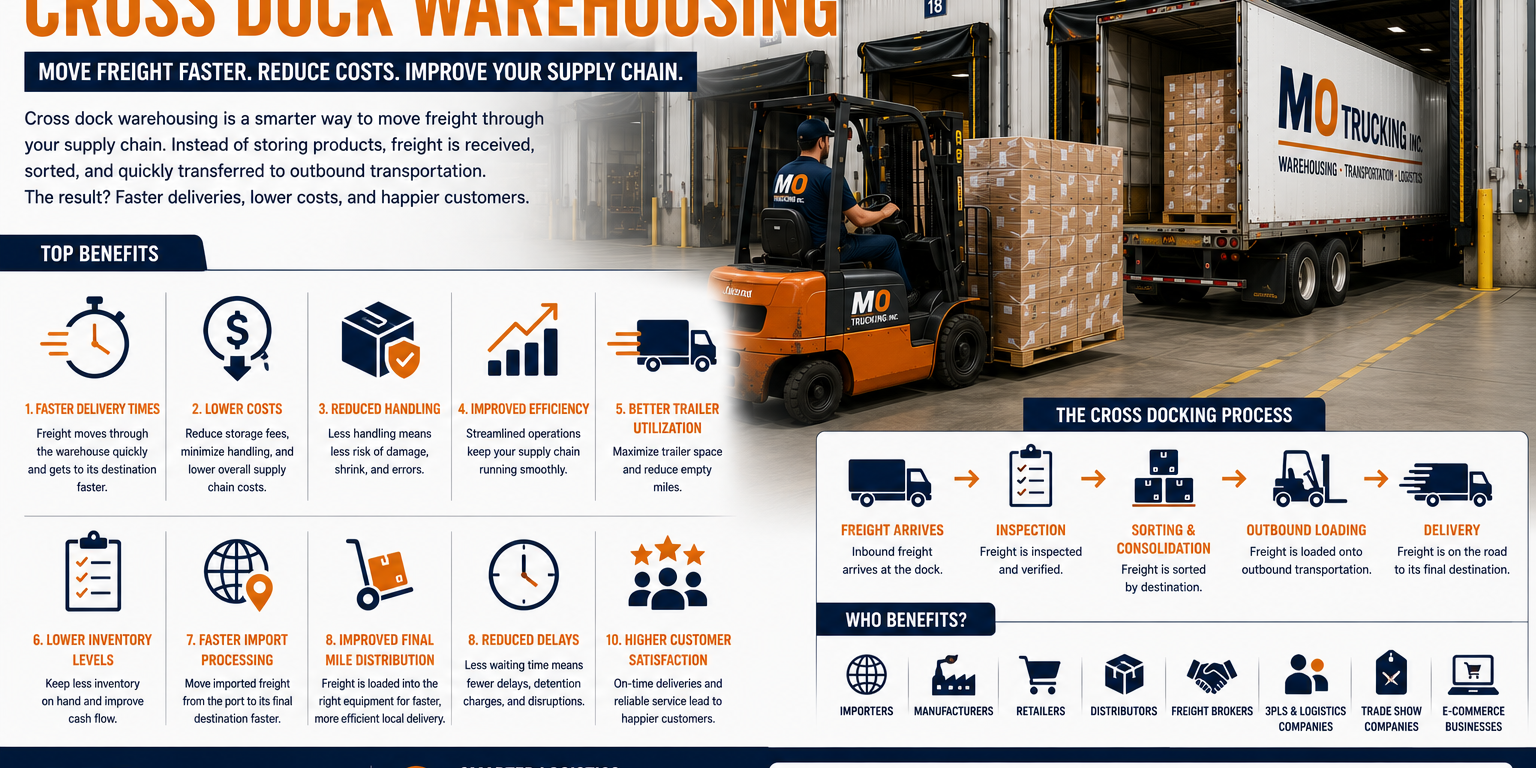
Benefits of Cross Dock Warehousing: Why More Businesses Are Moving Freight Instead of Storing It
For many businesses, speed has become just as important as cost. Customers expect faster deliveries, inventory turns are increasing, and transportation costs continue to rise. As a result, many companies are replacing traditional warehousing with cross dock operations to improve efficiency throughout their supply chain.
If you’re considering using a Cross Dock Warehouse New York, understanding the advantages of cross dock warehousing can help you determine whether it’s the right solution for your business.
Instead of storing products for weeks or months, cross dock warehouses are designed to move freight quickly from inbound transportation directly to outbound delivery, reducing costs while improving delivery performance.
What Is Cross Dock Warehousing?
Cross dock warehousing is a logistics process where freight is received at a warehouse, inspected if necessary, sorted, and quickly transferred to outbound transportation instead of being placed into long-term storage.
The primary objective is to keep freight moving through the supply chain while minimizing warehouse storage and unnecessary handling.
-
Faster Delivery Times
Perhaps the biggest advantage of cross dock warehousing is speed.
Instead of allowing freight to remain inside a warehouse for days or weeks, shipments continue moving almost immediately after arrival.
This helps businesses:
- Meet customer deadlines
- Improve on-time deliveries
- Reduce transit delays
- Increase supply chain responsiveness
For companies serving New York City and the Northeast, faster freight movement often creates a significant competitive advantage.
-
Lower Warehouse Costs
Traditional warehouses generate costs through:
- Storage fees
- Inventory management
- Multiple handling events
- Longer warehouse occupancy
Cross dock warehouses dramatically reduce these expenses because freight spends very little time inside the building.
Less storage means lower operating costs.
-
Reduced Freight Handling
Every time freight is touched, there is an opportunity for:
- Damage
- Misplaced freight
- Lost labels
- Inventory errors
Cross dock warehousing minimizes these risks by reducing the number of times freight must be handled before delivery.
-
Improved Supply Chain Efficiency
Cross docking helps streamline every step of the transportation process.
Instead of waiting for inventory to be processed over several days, shipments continue moving toward customers much sooner.
Benefits include:
- Faster order fulfillment
- Better trailer utilization
- Reduced warehouse congestion
- Improved inventory flow
-
Better Trailer Utilization
Many businesses combine multiple shipments before outbound delivery.
By efficiently loading trailers, companies can:
- Reduce transportation costs
- Maximize trailer capacity
- Eliminate partially empty trailers
- Improve delivery scheduling
Better trailer utilization often results in significant transportation savings.
- Lower Inventory Levels
Businesses using cross dock operations frequently carry less inventory because products spend less time inside warehouses.
This can improve:
- Cash flow
- Warehouse space utilization
- Inventory turnover
- Product availability
Many retailers and manufacturers use cross docking specifically for this reason.
- Faster Import Freight Processing
Cross dock warehousing is especially valuable for imported freight arriving through the Port of New York and New Jersey.
Instead of leaving freight at the port or moving it into long-term storage, shipments can be:
- Unloaded
- Inspected
- Consolidated
- Reloaded
- Delivered
This helps reduce storage charges while speeding up distribution.
- Better Final Mile Distribution
Cross dock warehouses allow freight to be transferred into the most appropriate delivery equipment.
Examples include:
- Liftgate trailers
- Straight trucks
- Local delivery vehicles
- Dedicated delivery trucks
This flexibility improves final mile delivery throughout the New York metropolitan area.
- Reduced Transportation Delays
Cross dock facilities help eliminate unnecessary waiting time by coordinating inbound and outbound shipments efficiently.
This results in:
- Better appointment scheduling
- Fewer trailer delays
- Reduced detention
- Faster freight movement
- Improved Customer Satisfaction
Ultimately, every benefit of cross docking supports one goal:
Deliver products faster while reducing costs.
Customers appreciate:
- Reliable deliveries
- Fewer shipping delays
- Better inventory availability
- Faster replenishment
Happy customers often become repeat customers.
Who Benefits Most From Cross Dock Warehousing?
Cross dock warehousing works particularly well for:
- Importers
- Manufacturers
- Retailers
- Food distributors
- Medical suppliers
- Construction suppliers
- Freight brokers
- Third-party logistics providers (3PLs)
- Trade show logistics companies
- E-commerce businesses
If products move quickly through your supply chain, cross docking may provide substantial operational benefits.
Frequently Asked Questions
Is cross dock warehousing cheaper than traditional warehousing?
For freight that doesn’t require long-term storage, cross dock warehousing often reduces warehouse costs, handling expenses, and transportation costs.
Does cross docking reduce product damage?
Yes. Since freight is handled fewer times, there is generally less opportunity for damage.
Is cross dock warehousing only for large companies?
No. Businesses of all sizes use cross dock warehouses to improve efficiency and reduce logistics costs.
Can imported freight use cross dock warehousing?
Absolutely. Import containers can be unloaded and immediately prepared for outbound transportation.
Does cross docking improve delivery speed?
Yes. Since freight spends very little time inside the warehouse, deliveries can often be completed much faster.
Is cross docking good for LTL freight?
Yes. Many businesses use cross docking to consolidate LTL shipments before final delivery.
Final Thoughts
Cross dock warehousing has become one of the most effective ways to improve supply chain efficiency while reducing transportation costs.
By minimizing storage, reducing freight handling, improving trailer utilization, and speeding up deliveries, businesses can create a more efficient logistics operation while providing better service to their customers.
For companies moving freight throughout New York and the Northeast, cross docking offers an excellent balance of speed, flexibility, and cost savings.
Ready to Improve Your Supply Chain?
If you’d like to learn how cross docking can reduce your transportation costs and improve delivery performance, Request a Free Quote and our logistics team will build a solution tailored to your business.
Have questions about warehouse services, freight handling, or transportation? Contact Our Warehouse Team today. We’re ready to help you find the right logistics solution for your operation.
Why I like this structure
This article has one clear purpose: make your “Cross Dock Warehouse New York” page stronger. It does that with a single exact-match internal link near the beginning, then ends with two conversion-focused links. Keeping the educational article focused this way reinforces your main service page without competing against it, while also giving visitors clear paths to request a quote or get in touch.