Cross Docking vs Transloading: What’s the Difference and Which Service Does Your Business Need?
Many businesses use the terms cross docking and transloading interchangeably, but they are not the same. While both services involve moving freight through a warehouse, they serve different purposes within the supply chain.
If you’re considering using a Cross Dock Warehouse New York, understanding the difference between cross docking and transloading can help you choose the right logistics solution while reducing transportation costs and improving efficiency.
Whether you’re an importer, manufacturer, retailer, freight broker, or third-party logistics provider (3PL), knowing when to use each service can streamline your operation and improve customer satisfaction.
What Is Cross Docking?
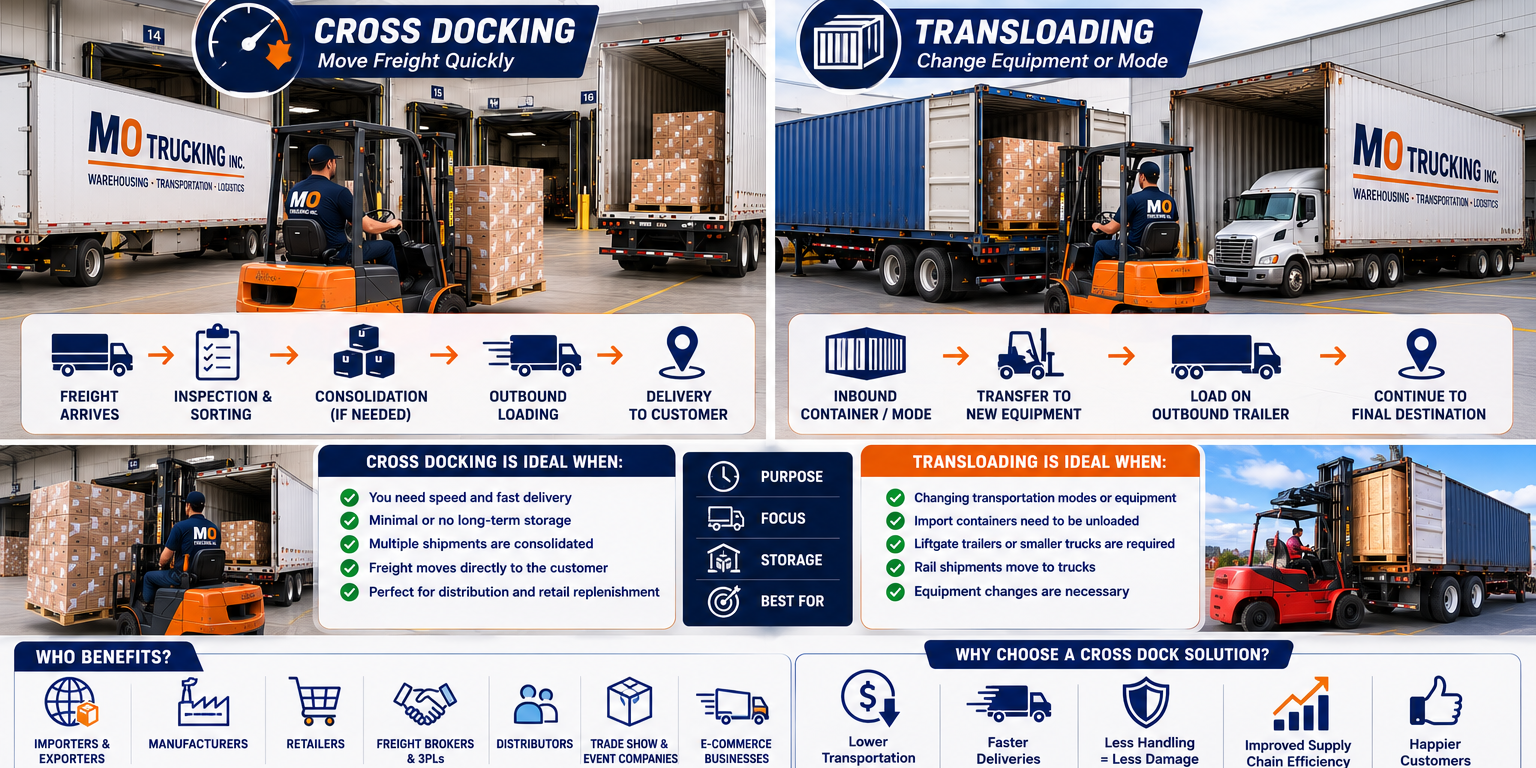
Cross docking is a warehouse process where inbound freight is received, inspected if necessary, sorted, and transferred directly to outbound transportation with little or no long-term storage.
The goal is simple:
Also, Move freight as quickly as possible.
A typical cross dock process includes:
- Receiving inbound freight
- Verifying shipment information
- Sorting freight by destination
- Consolidating shipments when needed
- Loading outbound trucks
- Delivering freight
Cross docking is designed for speed and efficiency.
What Is Transloading?
Transloading is the process of transferring freight from one type of transportation or equipment to another.
Unlike cross docking, transloading often involves changing transportation modes or equipment.
Examples include:
- Ocean container to dry van trailer
- Ocean container to liftgate trailer
- Railcar to truck
- Trailer to straight truck
- Truck to truck
- Domestic trailer to local delivery vehicle
Transloading allows freight to continue moving when equipment changes are required.
The Biggest Difference
The primary difference is the purpose of the service.
Cross Docking
Designed to improve distribution by moving freight quickly through the warehouse.
Transloading
Designed to transfer freight between different transportation equipment or transportation modes.
Additionally, Many shipments actually use both services together.
Cross Docking vs Transloading Comparison
| Cross Docking | Transloading |
| Focuses on speed | Focuses on equipment changes |
| Minimal storage | May include temporary staging |
| Sorts freight for delivery | Transfers freight between transportation methods |
| Often consolidates shipments | Often changes trailer or transportation mode |
| Improves delivery efficiency | Improves transportation flexibility |
Neither service is better—they simply solve different logistics challenges.
When Should You Use Cross Docking?
Cross docking is ideal when:
- Freight needs immediate delivery
- Multiple shipments are consolidated
- Storage isn’t required
- Retail replenishment is time-sensitive
- Distribution routes are scheduled
- Freight needs to move quickly through the warehouse
Cross docking is commonly used by:
- Retailers
- Manufacturers
- Food distributors
- Freight brokers
- Trade show companies
- Medical suppliers
When Should You Use Transloading?
Transloading is the better choice when:
- Import containers arrive at the port
- Equipment changes are required
- Liftgate trailers are needed
- Local delivery vehicles are required
- Rail shipments move to trucks
- Freight changes carriers
Transloading is particularly common with imported freight entering the Port of New York and New Jersey.
Can a Shipment Use Both?
Absolutely.
Additionally, Many shipments use cross docking and transloading together.
For example:
- An ocean container arrives from overseas.
- Freight is unloaded.
- Shipments are inspected.
- Freight is sorted by destination.
- Multiple customer orders are consolidated.
- Freight is loaded into domestic trailers.
- Deliveries are completed throughout the Northeast.
This combination provides maximum efficiency while reducing transportation costs.
How Cross Dock Warehouses Improve Supply Chain Efficiency
Cross dock warehouses improve supply chain performance by reducing unnecessary storage and keeping freight moving.
Businesses often experience:
- Faster deliveries
- Lower transportation costs
- Reduced freight handling
- Better inventory flow
- Improved trailer utilization
- Fewer transportation delays
- Better customer satisfaction
For companies handling time-sensitive freight, these improvements can significantly increase operational efficiency.
Who Should Use a Cross Dock Warehouse?
Cross dock warehouses are ideal for businesses that move freight quickly and don’t require long-term inventory storage.
Industries that commonly benefit include:
- Importers
- Manufacturers
- Retailers
- Distribution companies
- Freight brokers
- Third-party logistics providers (3PLs)
- Trade show logistics companies
- Construction suppliers
- Medical equipment companies
- E-commerce businesses
If your products move through the supply chain rapidly, cross docking can help reduce costs and improve delivery performance.
How Importers Use Cross Dock Warehouses
Importers often use cross dock warehouses immediately after containers arrive at the Port of New York and New Jersey.
Instead of allowing freight to remain at the port, shipments are transferr to a warehouse where they can be:
- Unloaded
- Inspected
- Counted
- Consolidated
- Reloaded
- Delivered
This process helps reduce port storage charges while accelerating distribution throughout New York and the Northeast.
Benefits of Using Both Services Together
Many businesses achieve the greatest efficiency by combining cross docking and transloading.
Benefits include:
- Lower transportation costs
- Faster freight movement
- Better equipment utilization
- Reduced storage expenses
- Improved inventory flow
- Increased supply chain flexibility
- Faster final mile deliveries
Using the right combination depends on your freight, transportation requirements, and delivery schedule.
Frequently Asked Questions
Is cross docking the same as transloading?
No. Cross docking focuses on quickly transferring freight through a warehouse, while transloading transfers freight between different transportation equipment or modes.
Which service is better for imported freight?
Many import shipments use both. Freight is often transloaded from an ocean container and then cross docked before final delivery.
Does cross docking reduce transportation costs?
Yes. Cross docking helps reduce storage costs, labor, freight handling, and transportation inefficiencies.
Is transloading only used for import containers?
No. Transloading is also used for trailer changes, rail shipments, equipment changes, and local delivery preparation.
Can one warehouse provide both services?
Yes. Many full-service logistics providers offer both cross docking and transloading under one roof, simplifying freight movement and reducing delays.
Which industries benefit the most?
Importers, manufacturers, retailers, freight brokers, distributors, construction suppliers, and trade show companies all commonly use cross docking and transloading services.
Final Thoughts
Cross docking and transloading are both valuable logistics services, but they solve different transportation challenges.
Cross docking is designed to move freight through a warehouse as quickly as possible, while transloading focuses on transferring freight between different transportation methods or equipment.
Many businesses achieve the greatest efficiency by combining both services into one streamlined logistics process. Additionally, Understanding when to use each service can help reduce transportation costs, improve delivery performance, and create a more efficient supply chain.
Need Help Choosing the Right Warehouse Solution?
Whether your freight requires cross docking, transloading, freight consolidation, or import container handling, Request a Free Quote and our logistics team will recommend the best solution for your shipment.
If you have questions about warehouse services or transportation, Contact Our Warehouse Team today. We’ll help you determine the most efficient and cost-effective logistics strategy for your business.