
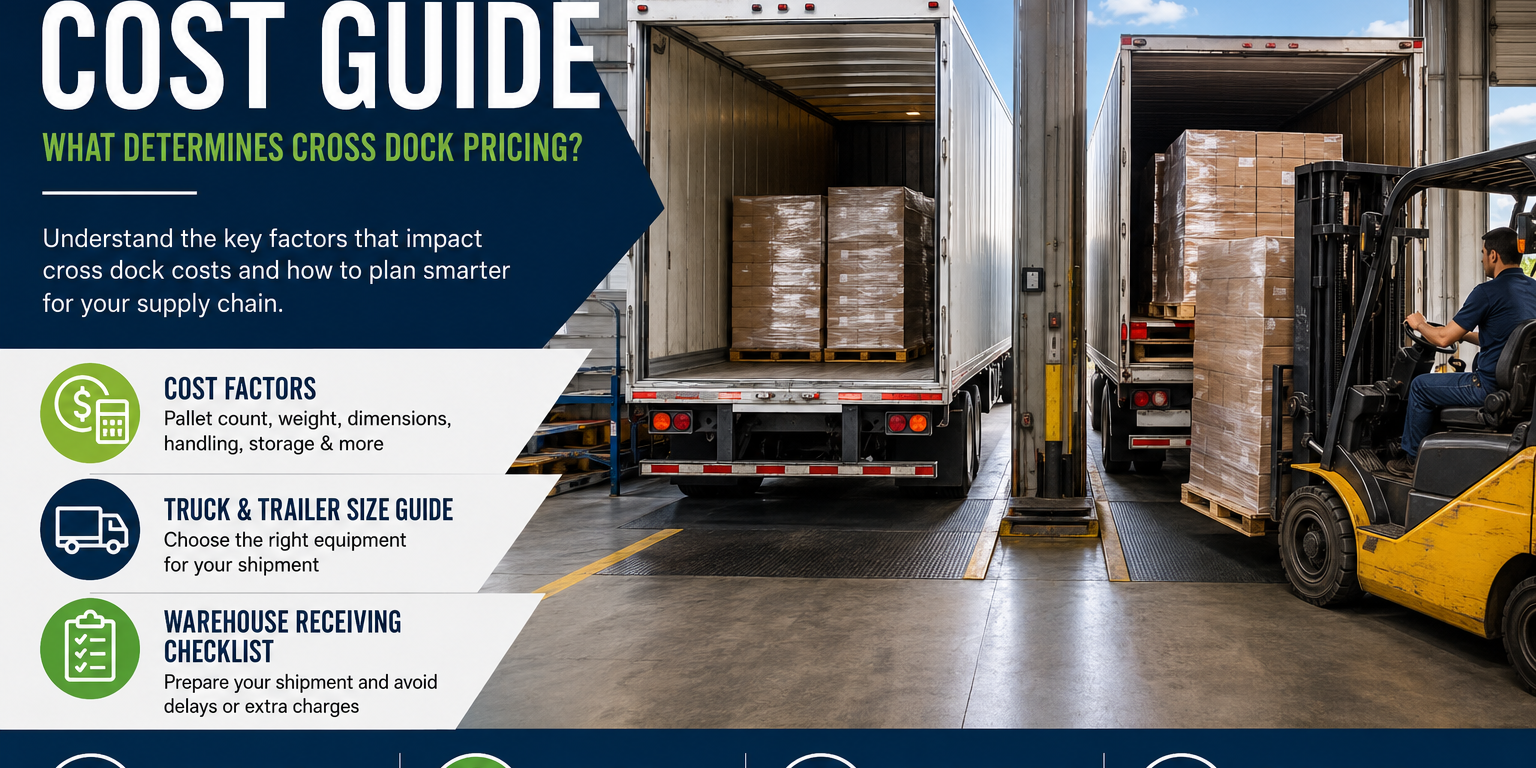
Cross Dock Cost Guide: What Determines Cross Dock Pricing?
When companies search for a Cross Dock Cost Guide, they’re usually trying to answer one important question:
“How much should cross docking cost, and what factors affect the price?”
The truth is there is no one-size-fits-all rate. Cross dock pricing depends on the freight itself, how much handling is required, equipment needed, delivery location, storage requirements, and whether additional transportation services are involved.
Understanding how cross dock warehouses calculate costs helps shippers avoid unexpected charges while selecting the most efficient solution for their supply chain.
What Is Cross Docking?
Cross docking is a logistics process where freight is unloaded from one truck and quickly transferred onto another without long-term storage.
Instead of sitting in a warehouse for weeks, freight typically moves through the facility within hours or a couple of days.
Typical cross dock services include:
- Freight transfers
- Trailer-to-trailer transfers
- LTL consolidation
- Final mile distribution
- Import freight transfers
- Export staging
- Trade show freight handling
- Pallet restacking
- Freight inspection
- Shipment sorting
The goal is simple:
- Reduce storage costs
- Speed up deliveries
- Eliminate unnecessary warehouse handling
- Keep products moving through the supply chain
What Affects Cross Dock Costs?
Several variables determine the final price.
Number of Pallets
Most warehouses charge based on the number of pallets being handled.
Examples include:
- 2 pallets
- 10 pallets
- 25 pallets
- 75 pallets
More pallets generally lower the cost per pallet because equipment and labor are spread across a larger shipment.
Weight of the Freight
Weight matters because heavier freight requires:
- Larger forklifts
- Additional labor
- More loading time
- Increased equipment wear
Heavy industrial machinery costs more to handle than lightweight consumer products.
Freight Dimensions
Oversized freight often requires:
- Wide dock doors
- Longer forklifts
- Extra maneuvering room
- Specialized loading equipment
Large crates, machinery, and trade show exhibits typically cost more than standard pallets.
Truck Type Matters
The type of vehicle arriving at the warehouse can influence handling costs.
Examples include:
- Box trucks
- Straight trucks
- 48-foot trailers
- 53-foot trailers
- Flatbeds
- Step decks
- Refrigerated trailers
- Ocean containers
Different equipment requires different unloading procedures.
For a detailed breakdown of equipment dimensions, capacities, and when each vehicle is used, see our Truck & Trailer Size Guide.
How Long Does the Freight Stay?
Many cross dock warehouses include a short period of free storage.
Examples may include:
- Same-day transfer
- Overnight transfer
- 24-hour holding
- 48-hour holding
After that, daily storage fees usually apply.
The longer freight remains in the warehouse, the more warehouse space it occupies and the higher the overall cost.
Does the Freight Need to Be Restacked?
Simple transfers cost less than freight requiring additional handling.
Additional services may include:
- Restacking damaged pallets
- Shrink wrapping
- Banding
- Rebuilding pallets
- Label replacement
- Sorting cartons
- Separating mixed freight
Every additional touch increases labor time.
Inspection Requirements
Some customers require warehouse personnel to inspect freight before release.
Inspection services can include:
- Counting cartons
- Verifying pallet quantities
- Photographing freight
- Checking for damage
- Recording serial numbers
- Confirming labels
- Quality control inspections
These services add labor but can prevent costly delivery issues later.
Delivery Services
Many companies use cross docking together with transportation.
Examples include:
- Local delivery
- Dedicated trucking
- Liftgate delivery
- White glove coordination
- Scheduled appointments
- Final mile delivery
Bundling warehouse and transportation services often reduces overall logistics costs.
Receiving Appointments
Some warehouses operate on:
- First come, first served
- Scheduled appointments
- Dedicated unloading windows
Proper scheduling reduces congestion and improves turnaround times.
Before shipping freight to a warehouse, review a Warehouse Receiving Checklist to make sure your shipment includes all required documentation, labels, appointments, and carrier information.
Typical Cross Dock Services That Affect Pricing
Common services include:
- Cross docking
- Freight consolidation
- Transloading
- Container destuffing
- Trailer transfers
- Freight sorting
- Inventory verification
- Temporary storage
- Shipment staging
- Final mile distribution
The more services required, the higher the handling cost.
Why Cross Docking Often Saves Money
Although there is a handling charge, cross docking frequently reduces total logistics costs by eliminating unnecessary warehouse storage and reducing transportation inefficiencies.
Potential savings include:
- Lower storage costs
- Fewer warehouse touches
- Faster inventory turnover
- Reduced inventory carrying costs
- Shorter transit times
- Lower labor expenses
- Improved truck utilization
- Reduced damage risk
For many supply chains, the savings outweigh the handling fee.
Questions to Ask Before Requesting a Quote
To receive an accurate cross dock quote, be prepared to provide:
- Number of pallets
- Total weight
- Dimensions
- Commodity description
- Pickup location
- Delivery location
- Required delivery date
- Trailer type
- Liftgate requirements
- Appointment requirements
- Whether storage is needed
- Whether freight requires restacking or inspection
The more information you provide upfront, the more accurate your quote will be.
Choosing the Right Cross Dock Warehouse
Price should never be the only consideration.
Look for a warehouse that offers:
- Experienced forklift operators
- Multiple loading docks
- Fast truck turnaround
- Secure freight handling
- Flexible scheduling
- Local delivery capabilities
- Dedicated trucking
- Modern warehouse equipment
- Clear communication
- Transparent pricing
A reliable warehouse helps keep freight moving while reducing delays throughout your supply chain.
Frequently Asked Questions
How much does cross docking usually cost?
Pricing varies based on pallet count, freight weight, dimensions, handling requirements, storage time, and transportation services. Many warehouses charge per pallet, while others provide flat project pricing for larger shipments.
Is cross docking cheaper than warehousing?
For freight that needs to move quickly, yes. Cross docking eliminates long-term storage costs and reduces unnecessary handling, often making it a more cost-effective option than traditional warehousing.
Does pallet restacking increase the cost?
Yes. Restacking requires additional labor, equipment, and time, so it is typically priced separately from basic cross dock handling.
Can cross dock warehouses provide delivery?
Many facilities offer dedicated trucking, LTL distribution, liftgate delivery, and final mile transportation in addition to cross dock services.
What information should I provide for a quote?
Provide the pallet count, weight, dimensions, pickup and delivery locations, required dates, commodity details, and any special handling requirements such as appointments, inspections, or temporary storage.
Get a Cross Dock Quote
Whether you’re moving a few pallets or coordinating hundreds of shipments each week, understanding cross dock pricing helps you plan transportation costs and improve supply chain efficiency.
At MO Trucking Inc., we provide professional cross docking, freight transfers, pallet restacking, temporary storage, transloading, and final mile delivery throughout New York City, Long Island, and the surrounding region. Our experienced warehouse team works with carriers, brokers, importers, manufacturers, and distributors to keep freight moving quickly while minimizing delays and unnecessary costs.
Contact us today for a customized cross dock quote tailored to your shipment requirements.