
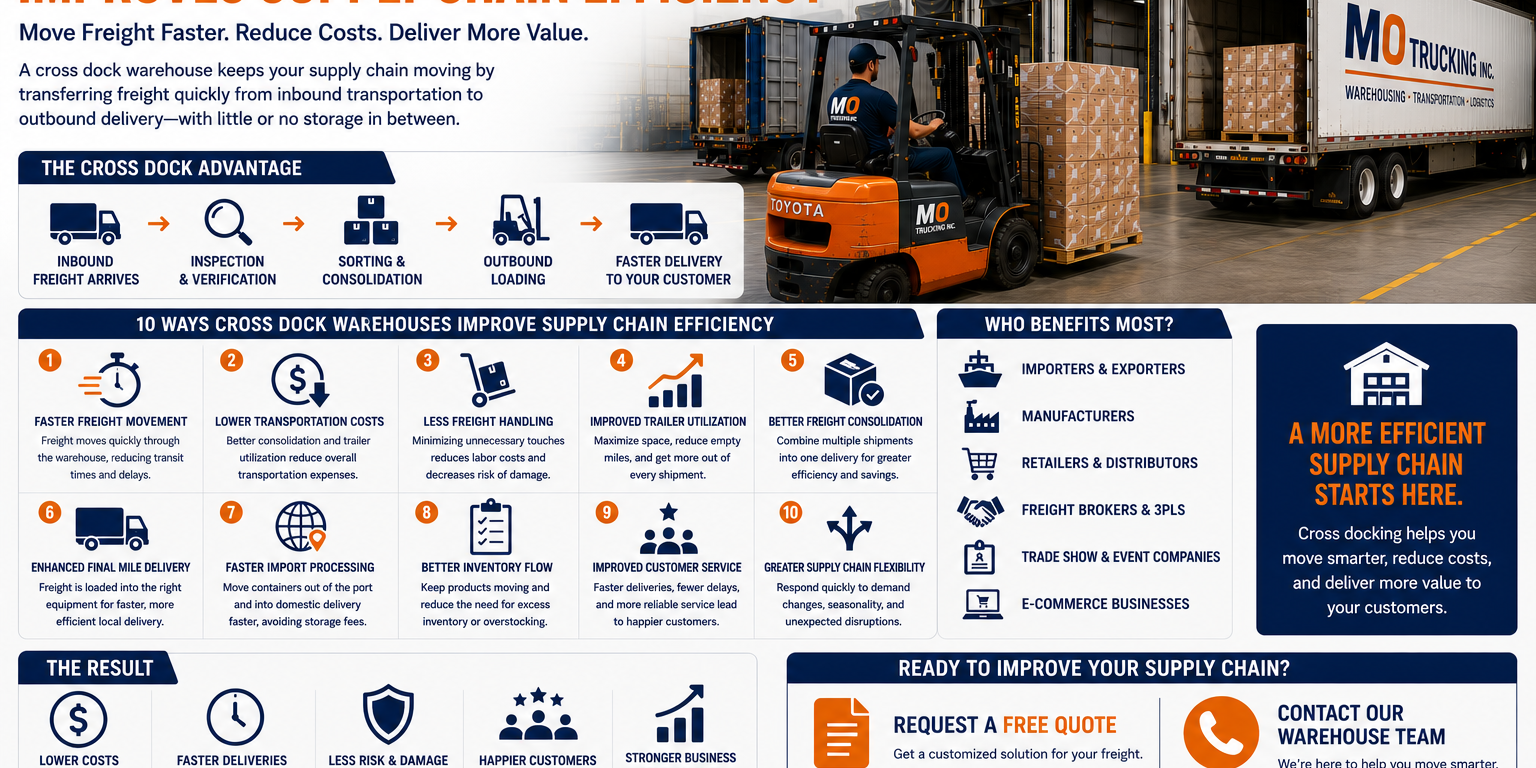
How a Cross Dock Warehouse Improves Supply Chain Efficiency
Supply chain efficiency has become one of the biggest competitive advantages for businesses. Customers expect faster deliveries, inventory costs continue to rise, and companies are constantly looking for ways to reduce transportation expenses while improving service.
One of the most effective ways to accomplish these goals is by utilizing a Cross Dock Warehouse New York. Instead of storing freight for extended periods, cross dock warehouses are designed to keep products moving through the supply chain as quickly and efficiently as possible.
Whether you’re an importer, manufacturer, retailer, freight broker, or third-party logistics provider (3PL), cross docking can significantly improve the way your freight moves from origin to final delivery.
What Is Supply Chain Efficiency?
Supply chain efficiency refers to how effectively products move from suppliers to customers while minimizing:
- Transportation costs
- Warehouse expenses
- Inventory levels
- Freight handling
- Delivery delays
- Product damage
An efficient supply chain delivers products faster while using fewer resources and creating a better customer experience.
What Is a Cross Dock Warehouse?
A cross dock warehouse is a logistics facility where freight is received, inspected if necessary, sorted, and transferred directly to outbound transportation with little or no long-term storage.
Instead of allowing inventory to sit inside a warehouse, freight continues moving toward its destination almost immediately.
This process eliminates unnecessary delays while improving overall logistics performance.
-
Faster Freight Movement
The greatest advantage of cross docking is speed.
Instead of storing freight for days or weeks, shipments are quickly transferred from inbound transportation to outbound trucks.
This helps businesses:
- Reduce transit times
- Improve delivery performance
- Meet customer deadlines
- Keep inventory moving
The faster freight moves, the more efficient the supply chain becomes.
-
Reduced Inventory Levels
Traditional warehouses often require businesses to maintain larger inventory levels.
Cross dock operations reduce the need for long-term storage by moving products directly through the warehouse.
Benefits include:
- Lower carrying costs
- Better cash flow
- Increased inventory turnover
- More available warehouse space
Reducing inventory is one of the simplest ways to improve supply chain efficiency.
-
Lower Transportation Costs
Transportation is one of the largest supply chain expenses.
Cross dock warehouses help lower costs by:
- Consolidating shipments
- Improving trailer utilization
- Reducing empty trailer space
- Eliminating unnecessary transportation
These efficiencies reduce overall logistics expenses while improving service.
-
Less Freight Handling
Every time freight is moved, the risk of damage increases.
Cross docking minimizes handling by reducing unnecessary warehouse movements.
This results in:
- Less product damage
- Lower labor costs
- Fewer shipping errors
- Better inventory accuracy
-
Improved Freight Consolidation
Many businesses receive freight from multiple suppliers.
A cross dock warehouse allows shipments to be combined before delivery.
Freight consolidation helps businesses:
- Reduce transportation costs
- Maximize trailer capacity
- Simplify deliveries
- Improve route planning
-
Better Final Mile Distribution
Cross dock warehouses prepare freight for efficient local delivery.
Shipments can be transferred into:
- Liftgate trailers
- Straight trucks
- Dedicated delivery vehicles
- Local distribution equipment
Using the right equipment helps improve delivery efficiency throughout the New York metropolitan area.
-
Faster Import Freight Processing
Importers often use cross dock warehouses immediately after containers arrive from overseas.
Instead of leaving freight at the port or placing it into long-term storage, shipments can be:
- Unloaded
- Inspected
- Sorted
- Consolidated
- Reloaded
- Delivered
This reduces delays while helping businesses avoid unnecessary storage charges.
-
Better Customer Service
An efficient supply chain creates happier customers.
Cross docking helps businesses provide:
- Faster deliveries
- More reliable delivery schedules
- Better inventory availability
- Fewer shipping delays
Customer satisfaction often improves when products arrive on time and in good condition.
-
Increased Warehouse Productivity
Cross dock facilities are designed to move freight—not store it.
Because freight continues moving, warehouse operations become more productive by:
- Processing more shipments
- Reducing congestion
- Improving dock utilization
- Increasing throughput
Higher productivity benefits both warehouse operators and customers.
-
Greater Supply Chain Flexibility
Markets change quickly.
Cross dock warehouses allow businesses to respond faster to:
- Customer demand
- Inventory changes
- Transportation disruptions
- Seasonal volume increases
- Emergency shipments
This flexibility helps businesses remain competitive while reducing operational risks.
Who Benefits Most from Cross Dock Warehousing?
Cross dock warehouses support a wide variety of industries, including:
- Importers
- Manufacturers
- Retailers
- Freight brokers
- Third-party logistics providers (3PLs)
- Food distributors
- Medical suppliers
- Construction suppliers
- Trade show companies
- E-commerce businesses
Any company moving freight quickly can benefit from improved supply chain efficiency.
Frequently Asked Questions
How does a cross dock warehouse improve supply chain efficiency?
Cross dock warehouses reduce storage time, minimize freight handling, improve trailer utilization, and move products through the supply chain faster.
Does cross docking reduce transportation costs?
Yes. Better freight consolidation, improved trailer utilization, and fewer handling events often reduce overall logistics expenses.
Is cross docking only for large companies?
No. Businesses of all sizes can benefit from faster freight movement and lower operating costs.
Can cross docking improve customer service?
Absolutely. Faster deliveries, more reliable schedules, and fewer shipping errors all contribute to a better customer experience.
Do importers benefit from cross docking?
Yes. Importers frequently use cross dock warehouses to move freight quickly from ocean containers into domestic transportation while avoiding unnecessary storage.
Can cross docking improve inventory management?
Yes. Because products move through the warehouse faster, businesses often reduce inventory levels while increasing inventory turnover.
Final Thoughts
Supply chain efficiency isn’t just about moving freight—it’s about moving freight smarter.
Cross dock warehouses help businesses reduce transportation costs, minimize storage, improve freight flow, and increase delivery speed without sacrificing service quality.
As customer expectations continue to grow, businesses that streamline their supply chains through cross docking are often better positioned to reduce costs, improve productivity, and stay ahead of the competition.
Ready to Improve Your Supply Chain?
If you’re looking for a smarter way to move freight, Request a Free Quote and our logistics experts will design a warehouse solution that fits your operation.
Have questions about cross docking, freight handling, or warehouse services? Contact Our Warehouse Team today. We’re ready to help you improve your supply chain and keep your freight moving efficiently.