
What Is a Cross Dock Warehouse? A Complete Guide for Importers, Manufacturers & Freight Brokers
If you’re searching for a cross-dock-warehouse-new-york, understanding how cross docking works can help you reduce transportation costs, improve delivery times, and simplify your supply chain.
Unlike traditional warehouses that focus on storing inventory, cross dock warehouses are designed to move freight quickly. Products arrive, are inspected if necessary, sorted, and loaded onto outbound trucks with little or no long-term storage. This allows businesses to improve efficiency while reducing unnecessary warehouse expenses.
Whether you’re an importer, manufacturer, retailer, freight broker, or third-party logistics provider, understanding cross docking can help determine whether this logistics solution is right for your operation.
What Is a Cross Dock Warehouse?
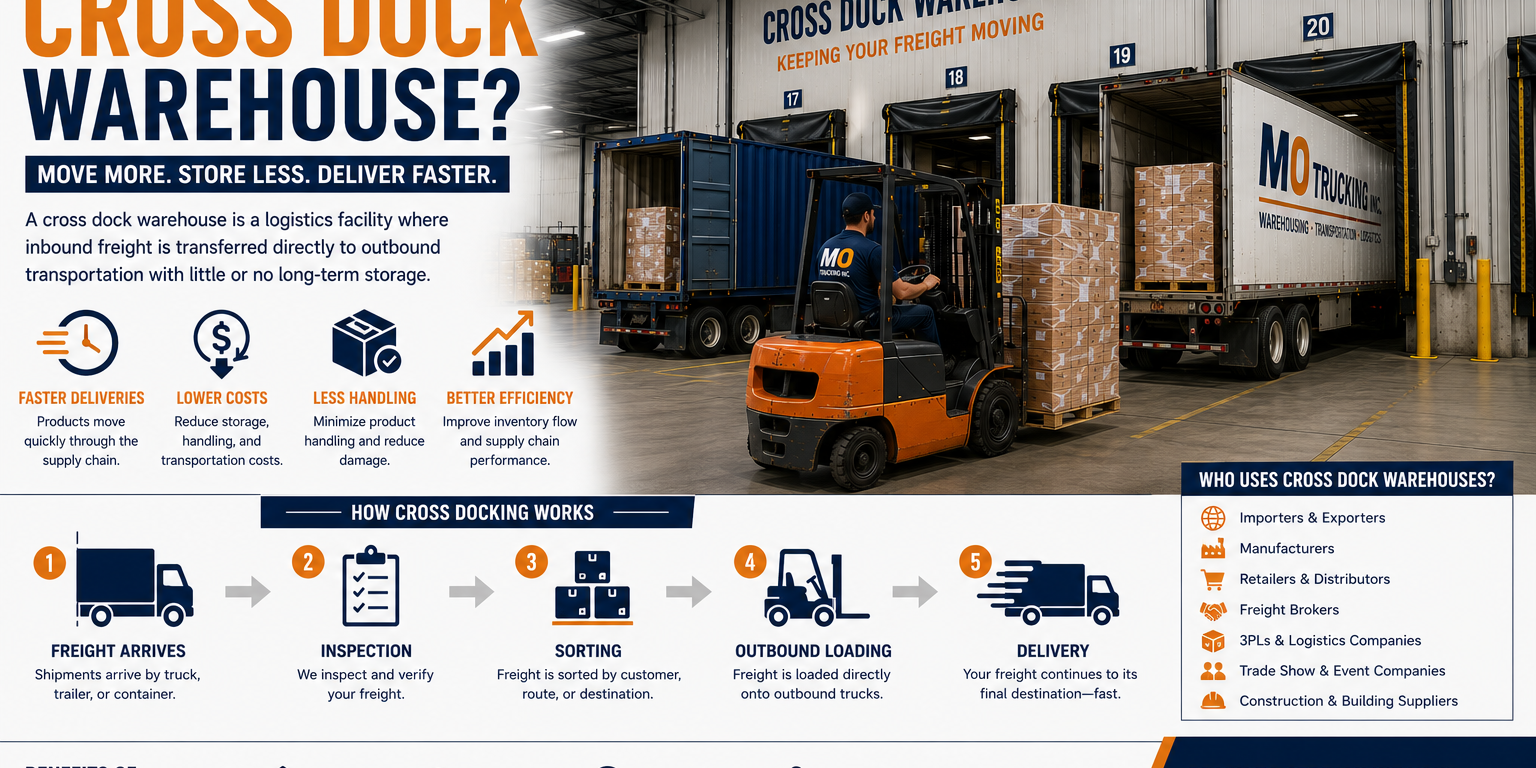
A cross dock warehouse is a logistics facility where inbound freight is transferred directly to outbound transportation instead of being stored for extended periods.
The primary objective is to keep freight moving.
Shipments commonly arrive from:
- Ocean containers
- LTL carriers
- Truckload carriers
- Distribution centers
- Manufacturers
- Suppliers
Instead of placing inventory into storage, warehouse personnel prepare freight for immediate outbound transportation.
How Does a Cross Dock Warehouse Work?
Although every operation is different, most cross dock facilities follow a similar process.
Step 1 — Freight Arrives
Freight arrives by trailer, straight truck, ocean container, or LTL carrier.
Step 2 — Inspection
Warehouse personnel verify:
- Piece count
- Labels
- Purchase orders
- Visible damage
- Delivery instructions
Step 3 — Sorting
Freight is organized by:
- Customer
- Delivery route
- Project
- Store location
- Purchase order
Step 4 — Outbound Loading
Shipments are loaded into outbound trailers or delivery vehicles.
Depending on the shipment, freight may also be consolidated or transferred into liftgate equipment for final delivery.
Step 5 — Delivery
Freight continues toward its destination without remaining in long-term storage.
What Is the Difference Between Cross Docking and Traditional Warehousing?
Although both involve warehouse operations, they serve different purposes.
| Cross Dock Warehouse | Traditional Warehouse |
| Minimal storage | Long-term storage |
| Fast freight movement | Inventory storage |
| Reduced handling | Multiple handling events |
| Lower storage costs | Ongoing storage fees |
| Immediate outbound shipping | Inventory remains until needed |
Businesses often use both depending on the specific requirements of each shipment.
Who Uses Cross Dock Warehouses?
Cross dock facilities are used by many industries including:
- Importers
- Manufacturers
- Retailers
- Distribution companies
- Freight brokers
- Third-party logistics providers (3PLs)
- Trade show contractors
- Construction suppliers
- Medical equipment companies
- Food distributors
Benefits of Cross Dock Warehousing
Faster Deliveries
Products spend less time sitting in warehouses and more time moving toward customers.
Lower Transportation Costs
Better trailer utilization and reduced warehouse storage help lower overall logistics expenses.
Reduced Product Handling
Every time freight is handled there is an opportunity for damage.
Cross docking minimizes unnecessary handling.
Better Inventory Flow
Instead of sitting on warehouse shelves, inventory continues moving through the supply chain.
Improved Customer Service
Faster deliveries often lead to happier customers and fewer transportation delays.
When Should You Use a Cross Dock Warehouse?
Cross docking is especially effective when:
- Import containers arrive from overseas
- Freight must change trailers
- Multiple vendors ship to one customer
- Liftgate equipment is required
- Shipments are time-sensitive
- Local distribution is required
- Products don’t require long-term storage
Related Warehouse Services
Businesses using cross dock warehouses often require additional logistics services including:
- Transloading Services
- Trailer Transloading
- Container Unloading
- Container Destuffing
- Floor Loaded Container Unloading
- Freight Consolidation
- LTL Consolidation
- Truck-to-Truck Freight Transfer
- Final Mile Delivery
- Distribution Services
Combining these services under one warehouse provider helps simplify logistics while reducing transportation costs.
Frequently Asked Questions
What is the purpose of a cross dock warehouse?
The purpose of a cross dock warehouse is to transfer freight from inbound transportation directly into outbound transportation while minimizing storage time.
Does a cross dock warehouse store freight?
Sometimes, but the primary purpose is moving freight quickly rather than storing inventory.
What types of freight can be cross docked?
Most commercial freight can be cross docked including palletized freight, crates, retail products, manufacturing materials, construction supplies, trade show freight, and imported goods.
Is cross docking only for large companies?
No.
Businesses of all sizes use cross dock warehouses to improve efficiency and reduce transportation costs.
Can imported freight be cross docked?
Yes.
Many ocean containers are unloaded and immediately transferred into domestic trailers for regional distribution.
Is cross docking the same as transloading?
No.
Cross docking focuses on quickly moving freight through a warehouse.
Transloading typically involves transferring freight between different transportation modes or equipment. Many businesses use both services together.
Does cross docking save money?
Yes.
Many companies reduce warehouse costs, transportation expenses, and product handling by using cross dock operations.
Final Thoughts
A cross dock warehouse is one of the most efficient ways to move freight through the supply chain. Instead of paying for unnecessary warehouse storage, businesses can quickly transfer shipments, improve delivery speed, and reduce logistics costs.
Whether you’re importing freight through the Port of New York and New Jersey, distributing products throughout the Northeast, or coordinating deliveries for multiple customers, cross docking can significantly improve operational efficiency.
If you’re evaluating whether cross docking is the right solution for your business, working with an experienced warehouse provider can help you determine the most efficient approach for your shipments.
Ready to Learn More?
If you’re looking for fast, reliable warehouse solutions, Request a Free Quote and our team will provide a customized logistics solution for your freight.
Have questions about cross docking, warehouse services, or transportation? Contact Our Warehouse Team. We’ll be happy to discuss your project and recommend the best solution for your business.