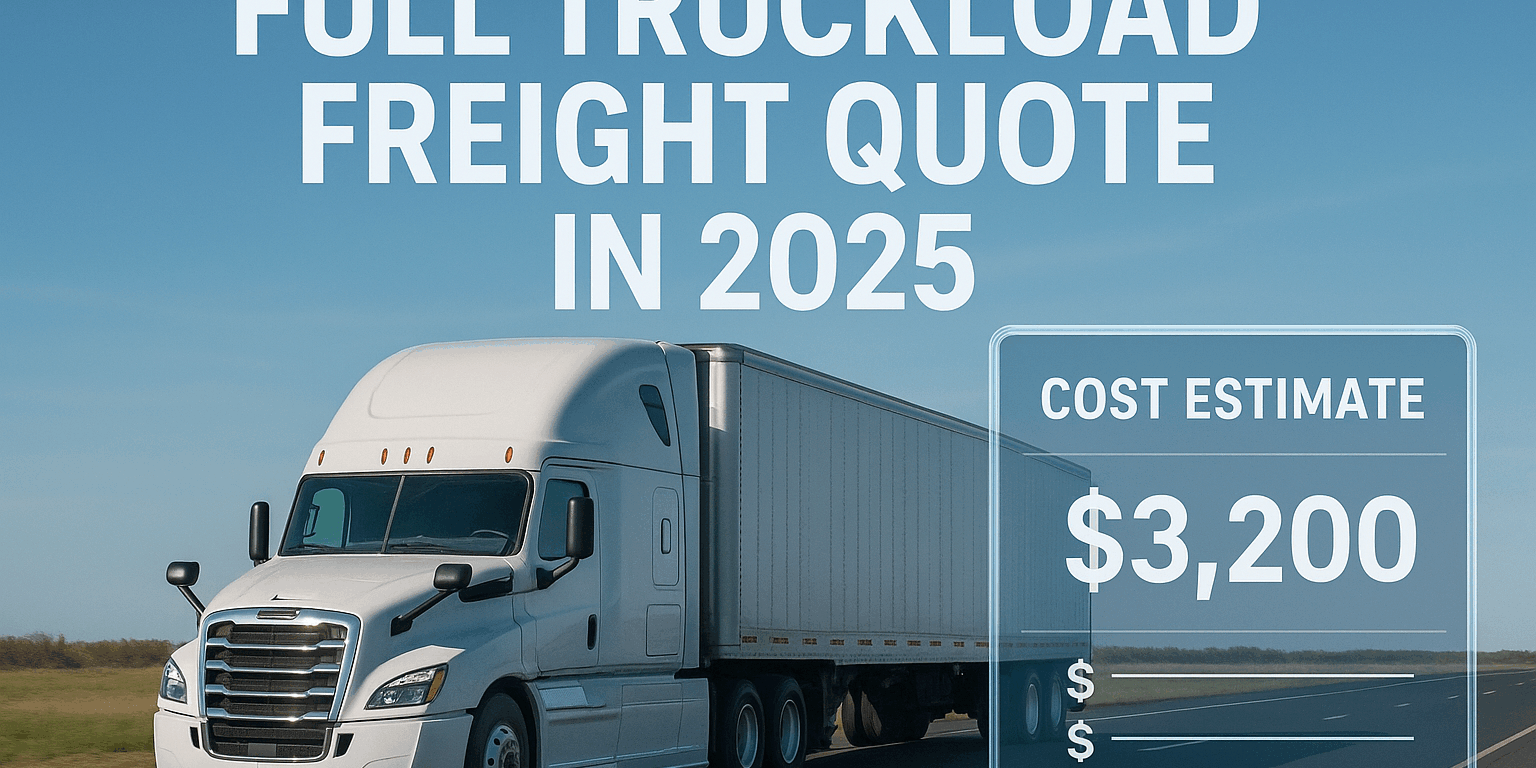
How to Calculate a Full Truckload Freight Quote in 2025
Shipping a full truckload (FTL) efficiently requires understanding how costs are calculated. Whether you’re a business owner or logistics manager, knowing how to estimate your shipping expenses is crucial. In this guide, we’ll break down the steps for calculating a Full Truckload Freight Quote in 2025 and explain how a Freight Calculator can make the process faster and more accurate.
What is a Full Truckload Freight Quote?
A Full Truckload Freight Quote is an estimate of the cost to ship a full truckload of goods from one location to another. Unlike less-than-truckload (LTL) shipping, where multiple shippers share space on a truck, FTL shipping reserves an entire truck for your shipment. This method provides faster transit times, reduced handling, and lower risk of damage.
Your quote will depend on several factors, including:
- Distance and route
- Weight and volume of cargo
- Type of goods (hazardous, perishable, or standard)
- Special equipment or handling requirements
- Current fuel prices
Step 1: Gather Shipment Details
To get an accurate Full Truckload Freight Quote, start by collecting all relevant shipment information:
- Pickup and delivery addresses – The exact locations determine mileage and transit time.
- Cargo weight and dimensions – Full truckload pricing often depends on weight limits and space occupied.
- Type of goods – Fragile, hazardous, or temperature-sensitive items may require specialized equipment.
- Delivery timeline – Expedited or scheduled delivery can influence cost.
Having these details ready ensures you get a precise estimate rather than a generic price range.
Step 2: Choose the Right Truck
Truck size and type affect your freight cost. Common FTL truck types include:
- Dry Van – Ideal for general cargo, standard choice for most FTL shipments.
- Refrigerated (Reefer) Trucks – Necessary for perishable goods.
- Flatbed Trucks – Used for oversized or irregular cargo.
- Specialized Equipment – Lift gates, pallet jacks, or other equipment may be required for certain deliveries.
Selecting the proper truck ensures safe delivery and avoids extra fees for equipment or labor.
Step 3: Use a Freight Calculator
A Freight Calculator is an essential tool for estimating FTL costs in 2025. Most freight calculators ask for:
- Pickup and delivery locations
- Cargo weight and dimensions
- Truck type
- Delivery speed or service level
By inputting these details, the calculator provides a quote based on current rates, fuel surcharges, and industry averages. Using a freight calculator can save time and help you compare multiple carriers quickly.
Tip: Always double-check the calculator’s assumptions, as some may not account for additional fees like tolls, special handling, or permits.
Step 4: Understand Cost Components
A comprehensive Full Truckload Freight Quote includes several cost elements:
- Base Freight Rate – The core cost to transport your goods.
- Fuel Surcharge – Adjusted based on current diesel prices.
- Accessorial Fees – Extra charges for lift gates, residential delivery, or detention time.
- Insurance – Optional but recommended for high-value shipments.
Breaking down the quote helps you identify potential savings opportunities and ensures transparency.
Step 5: Compare Quotes from Multiple Carriers
Once you’ve used a Freight Calculator or received quotes, compare them based on:
- Total cost
- Transit time
- Carrier reliability and reviews
- Included services (tracking, insurance, handling)
Getting multiple quotes ensures you’re getting a competitive rate without sacrificing service quality.
Step 6: Confirm the Final Quote
After selecting a carrier, confirm your Full Truckload Freight Quote in writing. Ensure that all details—pickup, delivery, special handling, and any additional fees—are included. This helps prevent surprises when your shipment is on the road.
Final Thoughts
Calculating a Full Truckload Freight Quote in 2025 is easier than ever thanks to digital tools and Freight Calculators. By gathering shipment details, choosing the right truck, understanding cost components, and comparing quotes, shippers can make informed decisions that save both time and money.
For businesses looking to streamline their FTL shipping process, using an online freight calculator is the fastest way to get accurate, up-to-date estimates.