Should I Use a Broker or Go Direct to a Carrier for Full Truckload Shipping?
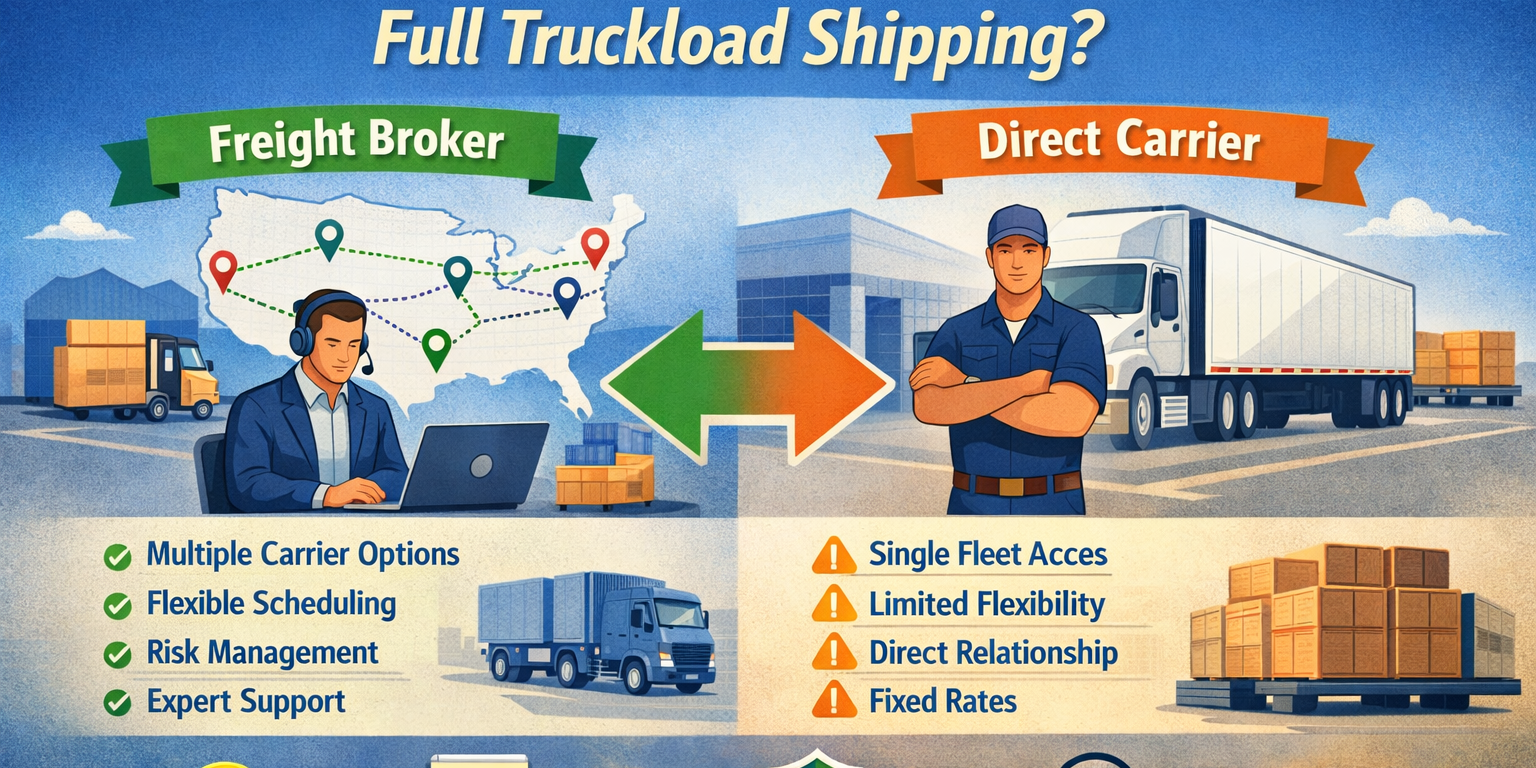
Many shippers ask whether it’s better to partner with a full truckload freight broker or work directly with a carrier. The question usually comes down to four concerns: cost, flexibility, risk, and communication. This isn’t just theory—these are practical issues every operations manager, purchasing team, or logistics director weighs before booking a truck.
Below we break down the differences so you can make the best decision for your supply chain.
Cost Differences: Which Is Cheaper?
There’s a misconception that going direct to a carrier eliminates brokerage margins and therefore saves money. Sometimes that’s true, but not always.
A full truckload freight broker often has access to:
- nationwide carrier networks
- competitive lane-by-lane pricing
- seasonal / backup capacity
- negotiated volume rates
Direct carriers may provide strong rates in specific lanes, but they’re limited to truck availability in their own fleet. Brokers can compare multiple options instantly—helping you secure the best possible rate for the moment you need capacity.
Flexibility: Who Can Move Your Load When Things Change?
Truckload shipping rarely goes perfectly as planned. Pickups get delayed, production schedules shift, drivers fall off, freight gets reclassified, and volumes spike unexpectedly.
Working directly with a carrier means limited capacity options. If something changes, you may need to scramble to source another carrier last-minute.
A full truckload freight broker acts as a single point of contact that can find replacement capacity quickly, even when equipment type, delivery windows, location, or volume shift.
Risk + Accountability: Who Stands Behind the Load?
When things go wrong—late delivery, damaged product, detention, service failure—the question becomes: who is accountable?
With a direct carrier, you’re dependent solely on their ability to resolve the issue internally. With a full truckload freight broker, you have someone advocating for you and coordinating with carriers, claims teams, dispatch, and customer service.
A strong broker protects you by:
- vetting CSA safety scores
- validating insurance
- monitoring carrier performance
- managing claims
- reducing exposure to capacity fraud
This added oversight lowers operational and financial risk for shippers.
Communication: Who Manages the Details?
When shipping full truckloads, communication delays cost money: detention hours, reschedules, missed appointments, and unnecessary stress.
Carriers may prioritize their internal operations over communication. A broker’s job is the opposite—constant updates and documentation.
A good full truckload freight broker handles:
- proactive pickup/delivery updates
- appointment scheduling
- tracking and in-transit visibility
- POD and paperwork follow-up
- after-hours communication
Many shippers choose brokers specifically for this added layer of accountability.
Bottom Line: Which Should You Choose?
Both options have advantages. Direct carriers work well when:
- lanes are predictable
- volumes are steady
- equipment needs are simple
A broker delivers more value when:
- lanes or volumes fluctuate
- timing is critical
- risk must be minimized
- communication matters
- you need multiple carrier options
- you want competitive pricing pressure
For most shippers, the flexibility and advocacy a broker provides outweigh the narrow cost savings of working direct when things go smoothly—which isn’t always the case in real-world shipping.
Considering a Broker for Your Truckload Program?
If you’d like help comparing rates, capacity solutions, or communication expectations, we can walk you through options and build a full truckload strategy tailored to your operation.
Just let me know—I can next:
- provide downloadable comparison charts
- write a landing page to convert this traffic
- create follow-up emails for leads
- draft additional blogs in the same cluster