
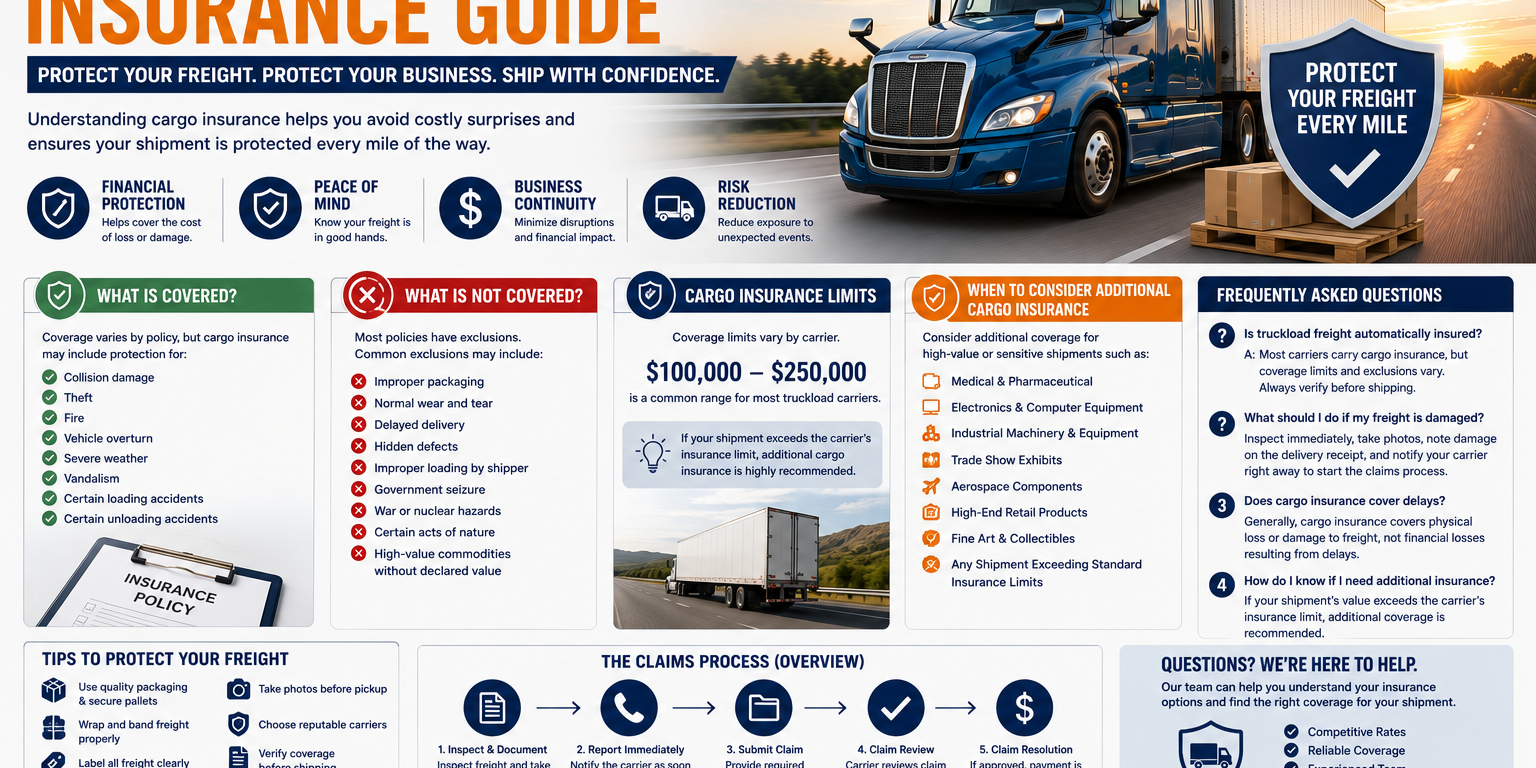
Truckload Freight Insurance Guide: Everything You Need to Know Before Shipping
When shipping valuable freight, one of the most important questions to ask is:
“What happens if my freight is damaged, lost, or stolen during transit?”
The answer often comes down to truckload freight insurance.
Many shippers assume their freight is automatically covered for its full value. In reality, cargo insurance varies between carriers, and understanding your coverage before your shipment moves can help you avoid costly surprises.
This guide explains how truckload freight insurance works, what it covers, what it doesn’t cover, and when you should consider purchasing additional cargo insurance.
What Is Truckload Freight Insurance?
Truckload freight insurance, often called cargo insurance, provides financial protection if freight is damaged, lost, or stolen while being transported.
Most professional trucking companies carry cargo insurance, but the amount of coverage varies depending on the carrier, the type of freight, and the shipment.
Insurance helps protect both the shipper and the transportation provider when unexpected events occur.
Why Is Freight Insurance Important?
Even with experienced drivers and careful handling, transportation involves risks that cannot always be controlled.
Examples include:
- Highway accidents
- Cargo theft
- Fire
- Severe weather
- Trailer overturns
- Water damage
- Loading accidents
- Unsecured cargo
- Natural disasters
Freight insurance helps reduce the financial impact if one of these events occurs.
What Does Cargo Insurance Typically Cover?
Coverage varies by policy, but cargo insurance may include protection for:
- Collision damage
- Theft
- Fire
- Vehicle overturn
- Weather-related damage
- Vandalism
- Certain loading accidents
- Certain unloading accidents
Always review the carrier’s policy to understand exactly what is covered.
What Is Usually Not Covered?
Many cargo policies have exclusions.
Examples may include:
- Improper packaging
- Normal wear and tear
- Delayed delivery
- Hidden defects
- Improper loading by the shipper
- Government seizure
- War
- Nuclear hazards
- Certain acts of nature
- High-value commodities without declared value
Every insurance policy is different, so it’s important to review the specific terms and conditions.
How Much Cargo Insurance Do Trucking Companies Carry?
Cargo insurance limits vary by carrier.
Many truckload carriers carry cargo insurance ranging from $100,000 to $250,000, while some specialize in higher-value freight and maintain significantly larger coverage limits.
If your shipment exceeds the carrier’s cargo insurance limit, additional insurance may be recommended.
Always ask your transportation provider about available coverage before shipping valuable freight.
When Should You Purchase Additional Cargo Insurance?
Additional cargo insurance is often recommended when shipping:
- Medical equipment
- Electronics
- Pharmaceuticals
- High-end retail products
- Manufacturing equipment
- Trade show exhibits
- Machinery
- Aerospace components
- Fine art
- High-value furniture
If the replacement cost of your shipment exceeds the carrier’s standard cargo insurance, purchasing additional coverage can provide valuable peace of mind.
Declared Value vs. Cargo Insurance
Many shippers confuse declared value with cargo insurance.
They are not the same.
Declared Value
- Establishes the value of the shipment.
- May affect carrier liability.
- Does not automatically provide full insurance coverage.
Cargo Insurance
- Provides financial protection based on the insurance policy.
- Covers qualifying losses subject to policy limits and exclusions.
If you’re unsure which option applies to your shipment, ask your transportation provider before booking.
Tips for Protecting Your Freight
Insurance is important, but preventing damage is even better.
Before shipping:
- Use quality pallets.
- Shrink-wrap freight securely.
- Band heavy items.
- Protect corners and edges.
- Label all freight clearly.
- Photograph shipments before pickup.
- Verify shipment counts.
- Use proper packaging materials.
- Confirm accurate weights and dimensions.
Well-prepared freight is less likely to be damaged during transportation.
Questions to Ask Before Shipping
Before booking a truckload shipment, ask:
- What is the carrier’s cargo insurance limit?
- Does my shipment exceed that limit?
- Are there exclusions for my commodity?
- Should I purchase additional cargo insurance?
- Is a Certificate of Insurance (COI) available?
- What is the claims process?
- How long do I have to report damage?
- Are photos required for claims?
These questions can help you avoid misunderstandings later.
What Happens If Freight Is Damaged?
If damage occurs:
- Inspect the freight immediately.
- Take photographs before unloading if possible.
- Note any visible damage on the delivery receipt.
- Notify the transportation provider immediately.
- Save all packaging materials.
- Keep copies of all shipping documents.
- Follow the carrier’s claims process.
Prompt reporting helps protect your ability to file a claim.
How to Reduce Insurance Risk
Experienced shippers often reduce risk by:
- Choosing reputable carriers.
- Providing accurate shipment information.
- Packaging freight correctly.
- Avoiding loose freight whenever possible.
- Verifying insurance coverage before pickup.
- Purchasing additional coverage for high-value shipments.
- Using dedicated truckload service when appropriate.
Good planning is often the best form of protection.
Common Freight That May Require Additional Insurance
Additional coverage is frequently considered for:
- Medical devices
- Laboratory equipment
- Electronics
- Computer servers
- Trade show displays
- Industrial machinery
- Precision manufacturing equipment
- Aerospace parts
- Telecommunications equipment
- Luxury retail products
The higher the shipment value, the more important it becomes to review your insurance options.
Frequently Asked Questions
Is truckload freight automatically insured?
Most professional carriers maintain cargo insurance, but coverage limits and exclusions vary. Always verify the amount of coverage available for your shipment.
How much cargo insurance do most trucking companies carry?
Many truckload carriers maintain cargo insurance limits between $100,000 and $250,000, although some carriers provide higher limits depending on the freight they transport.
Should I buy additional cargo insurance?
If your shipment’s value exceeds the carrier’s insurance limit or contains high-value freight, additional cargo insurance is often worth considering.
Does cargo insurance cover theft?
Many cargo insurance policies include theft coverage, but coverage depends on the policy’s specific terms, conditions, and exclusions.
What is a Certificate of Insurance (COI)?
A Certificate of Insurance is a document that summarizes a carrier’s insurance coverage, including policy limits and effective dates. Many customers request a COI before shipping.
What should I do if my freight arrives damaged?
Inspect the shipment immediately, document any damage with photographs, note the damage on the delivery receipt, and notify the carrier as soon as possible to begin the claims process.
Does cargo insurance cover delays?
Generally, cargo insurance covers physical loss or damage to freight, not financial losses resulting solely from shipping delays. Review the policy details for specific coverage.
Can MO Trucking Inc. help arrange additional cargo insurance?
Yes. If your shipment requires higher insurance limits than standard carrier coverage, we can discuss available options to help protect your freight during transit.
Final Thoughts
Truckload freight insurance is an important part of protecting your shipment and your business. While experienced carriers work hard to transport freight safely, unexpected events can happen on the road.
Understanding your carrier’s cargo insurance, reviewing coverage limits, and considering additional protection for high-value shipments can help reduce financial risk and provide greater confidence throughout the shipping process.
If you’re unsure about your shipment’s insurance needs, ask questions before your freight moves. A few minutes of planning can help prevent costly surprises later.
Contact MO Trucking Inc.
If you need a truckload freight quote, dedicated transportation, cross-docking, final-mile delivery, or guidance on cargo insurance options, our team is ready to assist.
MO Trucking Inc.
Email: Eric@motruckinginc.com
Phone: 631-755-5858
Text or After-Hours: 516-250-4480
Whether you’re shipping a standard truckload or a high-value shipment, we’ll help you select the right transportation solution and discuss the insurance options available to help protect your freight.