Beginner’s Guide to Truckload Shipping
If you’re new to shipping freight, understanding truckload shipping can seem overwhelming. Questions about trailer sizes, freight quotes, transit times, pickup requirements, and pricing are common for first-time shippers.
The good news is that truckload shipping doesn’t have to be complicated.
This beginner’s guide explains everything you need to know about Full Truckload (FTL) shipping, including how it works, when to use it, what information you’ll need, and how to get an accurate truckload freight quote.
Whether you’re shipping one load or planning ongoing transportation, this guide will help you make informed shipping decisions.
What Is Truckload Shipping?
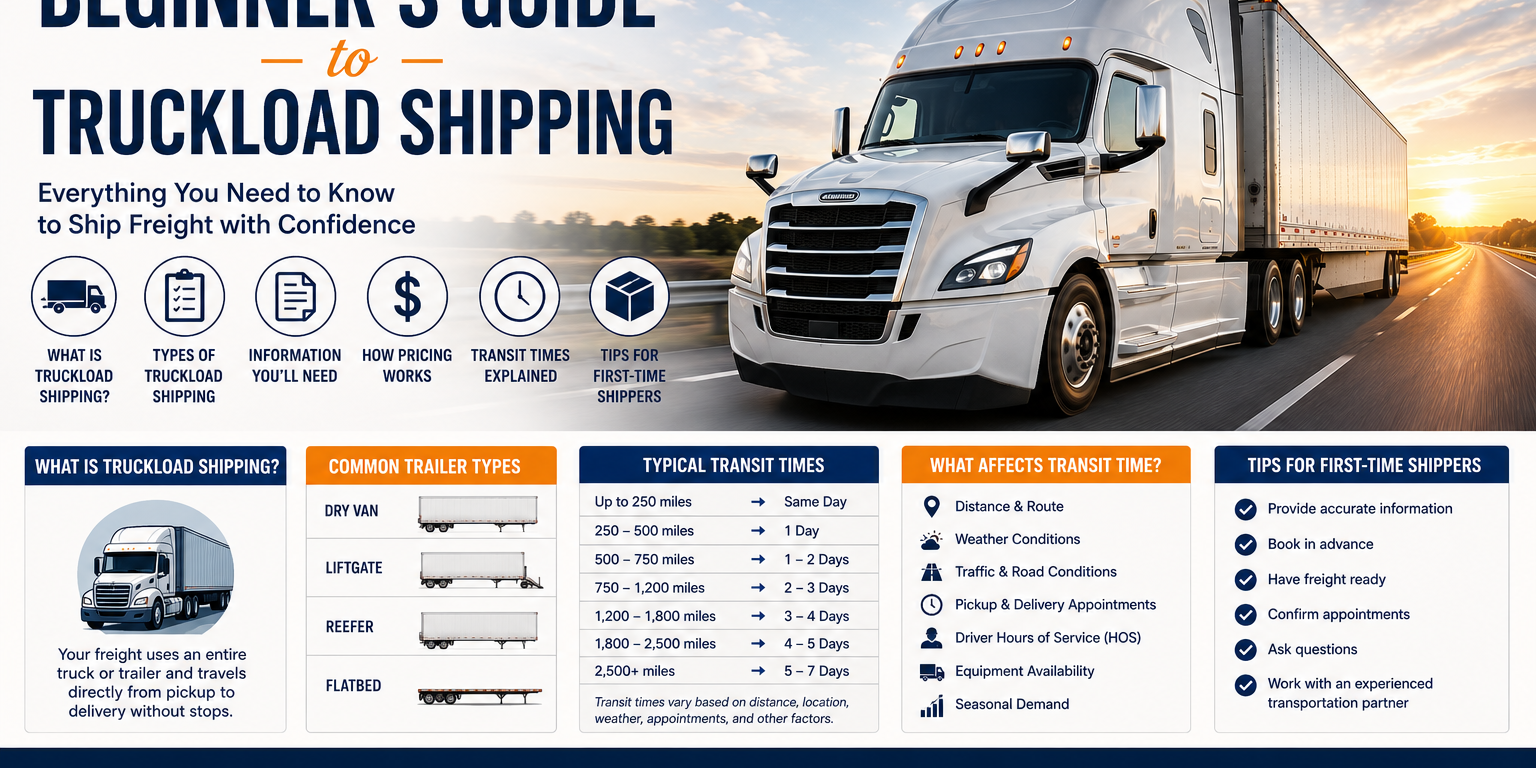
Truckload shipping, commonly referred to as Full Truckload (FTL), is a transportation service where one shipment is transported using an entire truck or dedicated trailer.
Unlike Less Than Truckload (LTL) shipping, truckload freight generally moves directly from the pickup location to the delivery destination without being transferred through multiple freight terminals.
Because the shipment stays on the same trailer throughout transit, truckload shipping often provides faster transit times and reduced freight handling.
When Should You Use Truckload Shipping?
Truckload shipping is typically the best option when:
- Your shipment fills most or all of a trailer.
- You have 10 or more pallets.
- Your freight weighs over 15,000 pounds.
- You need dedicated transportation.
- Your shipment is time-sensitive.
- Your freight is fragile or high value.
- You want to minimize handling during transit.
Even smaller shipments may benefit from truckload service when direct transportation or faster delivery is required.
Types of Truckload Shipping
Dry Van
The most common trailer used for general freight that does not require temperature control.
Common commodities include:
- Retail merchandise
- Manufacturing products
- Palletized freight
- Industrial equipment
- Consumer goods
Liftgate Truckload
A liftgate trailer is used when the pickup or delivery location does not have a loading dock.
The hydraulic liftgate safely lowers freight from the trailer to ground level.
Refrigerated (Reefer)
Refrigerated trailers maintain controlled temperatures for products such as:
- Food
- Beverages
- Pharmaceuticals
- Medical supplies
- Temperature-sensitive products
Flatbed
Flatbeds are designed for oversized or heavy freight that cannot be loaded into an enclosed trailer.
Typical shipments include:
- Steel
- Lumber
- Construction equipment
- Machinery
- Building materials
Dedicated Truckload
A dedicated truckload shipment uses equipment reserved exclusively for one customer.
Dedicated service is commonly used for:
- Expedited shipments
- High-value freight
- Trade shows
- Manufacturing
- Emergency deliveries
What Information Do You Need to Request a Truckload Quote?
To receive an accurate truckload freight quote, you’ll typically need:
- Pickup address
- Delivery address
- Pickup date
- Delivery deadline
- Commodity description
- Number of pallets or crates
- Shipment weight
- Freight dimensions
- Trailer type required
- Loading dock availability
- Liftgate requirements
- Appointment information
- Special handling instructions
Providing complete and accurate shipment details helps avoid delays and unexpected charges.
How Truckload Pricing Works
Truckload pricing is based on several factors, including:
- Distance
- Pickup and delivery locations
- Freight weight
- Shipment dimensions
- Trailer type
- Fuel prices
- Market capacity
- Seasonal demand
- Toll roads
- Loading and unloading requirements
- Delivery appointments
- Specialized services
Because every shipment is unique, truckload rates vary depending on the shipment’s specific requirements.
Understanding Transit Times
Truckload freight generally travels directly from pickup to delivery, resulting in faster transit than many shared freight services.
Typical transit times are:
| Distance | Estimated Transit Time |
| Up to 250 miles | Same day |
| 250–500 miles | 1 day |
| 500–750 miles | 1–2 days |
| 750–1,200 miles | 2–3 days |
| 1,200–1,800 miles | 3–4 days |
| 1,800–2,500 miles | 4–5 days |
| 2,500+ miles | 5–7 days |
Transit times may vary because of weather, appointments, traffic, and Hours of Service regulations.
Common Truckload Shipping Terms
As you begin shipping freight, you’ll frequently encounter these terms:
Bill of Lading (BOL) – The legal shipping document for the shipment.
Carrier – The trucking company transporting your freight.
Consignee – The company receiving the shipment.
Detention – Charges that may apply when loading or unloading exceeds the allotted free time.
Dry Van – A fully enclosed trailer used for general freight.
FTL – Full Truckload shipping.
Liftgate – A hydraulic platform used when no loading dock is available.
POD (Proof of Delivery) – Documentation confirming successful delivery.
Shipper – The company sending the freight.
Truckload Quote – A transportation price estimate based on shipment details.
How to Prepare Your Freight
Preparing freight properly helps reduce delays and minimize the risk of damage.
Best practices include:
- Secure freight on quality pallets.
- Use stretch wrap.
- Band heavy shipments.
- Clearly label each pallet.
- Verify shipment counts.
- Protect fragile items.
- Measure dimensions accurately.
- Confirm shipment weight.
Well-prepared freight moves more efficiently through the transportation process.
Common Beginner Mistakes
Many first-time shippers make avoidable mistakes.
Some of the most common include:
- Guessing shipment weight
- Incorrect dimensions
- Waiting until the last minute to book
- Forgetting delivery appointments
- Not mentioning liftgate requirements
- Poor pallet packaging
- Incomplete paperwork
- Incorrect addresses
Providing complete information upfront helps ensure accurate pricing and smoother transportation.
Tips for First-Time Shippers
If this is your first truckload shipment:
- Book transportation early.
- Verify all shipment information.
- Ask questions.
- Confirm pickup times.
- Keep communication open.
- Take photos before pickup.
- Save copies of your paperwork.
- Work with experienced transportation professionals.
Planning ahead often results in better pricing and fewer surprises.
Frequently Asked Questions
What is the difference between Truckload and LTL shipping?
Truckload shipping uses dedicated equipment for one shipment, while Less Than Truckload (LTL) combines multiple customers’ freight on the same trailer.
How much does truckload shipping cost?
Pricing depends on distance, shipment size, trailer type, market conditions, fuel costs, appointments, and other operational factors.
Is truckload shipping faster than LTL?
In many cases, yes. Because truckload shipments typically move directly from pickup to delivery without passing through multiple freight terminals, transit times are often shorter.
Can I ship just a few pallets on a truckload?
Yes. Some shippers choose truckload service even for smaller shipments when they need dedicated transportation or faster delivery.
Do I need a loading dock?
Not necessarily. If your facility does not have a loading dock, a liftgate-equipped truck or trailer may be able to accommodate your shipment.
How far in advance should I book a truckload shipment?
Whenever possible, book several days before pickup to improve equipment availability and pricing. Expedited and same-day service may also be available depending on capacity.
Can truckload shipments have multiple stops?
Yes. Truckload shipments can include multiple pickups or deliveries, although additional stops may affect pricing and transit time.
Final Thoughts
Truckload shipping is one of the most efficient and reliable ways to move large or time-sensitive freight. By understanding how truckload transportation works, preparing your shipment properly, and providing accurate information, you can simplify the shipping process and avoid unnecessary delays or costs.
Whether you’re shipping locally, regionally, or across the country, taking the time to understand the basics of truckload transportation will help you make confident shipping decisions and get the most value from your transportation provider.
Contact MO Trucking Inc.
If you need a truckload freight quote, dedicated transportation, cross-docking, final-mile delivery, or help planning your next shipment, our team is ready to assist.
MO Trucking Inc.
Email: Eric@motruckinginc.com
Phone: 631-755-5858
Text or After-Hours: 516-250-4480
Whether you’re shipping your first truckload or managing ongoing freight, our experienced team can help you choose the right equipment, answer your questions, and provide a competitive truckload freight quote tailored to your shipment.