
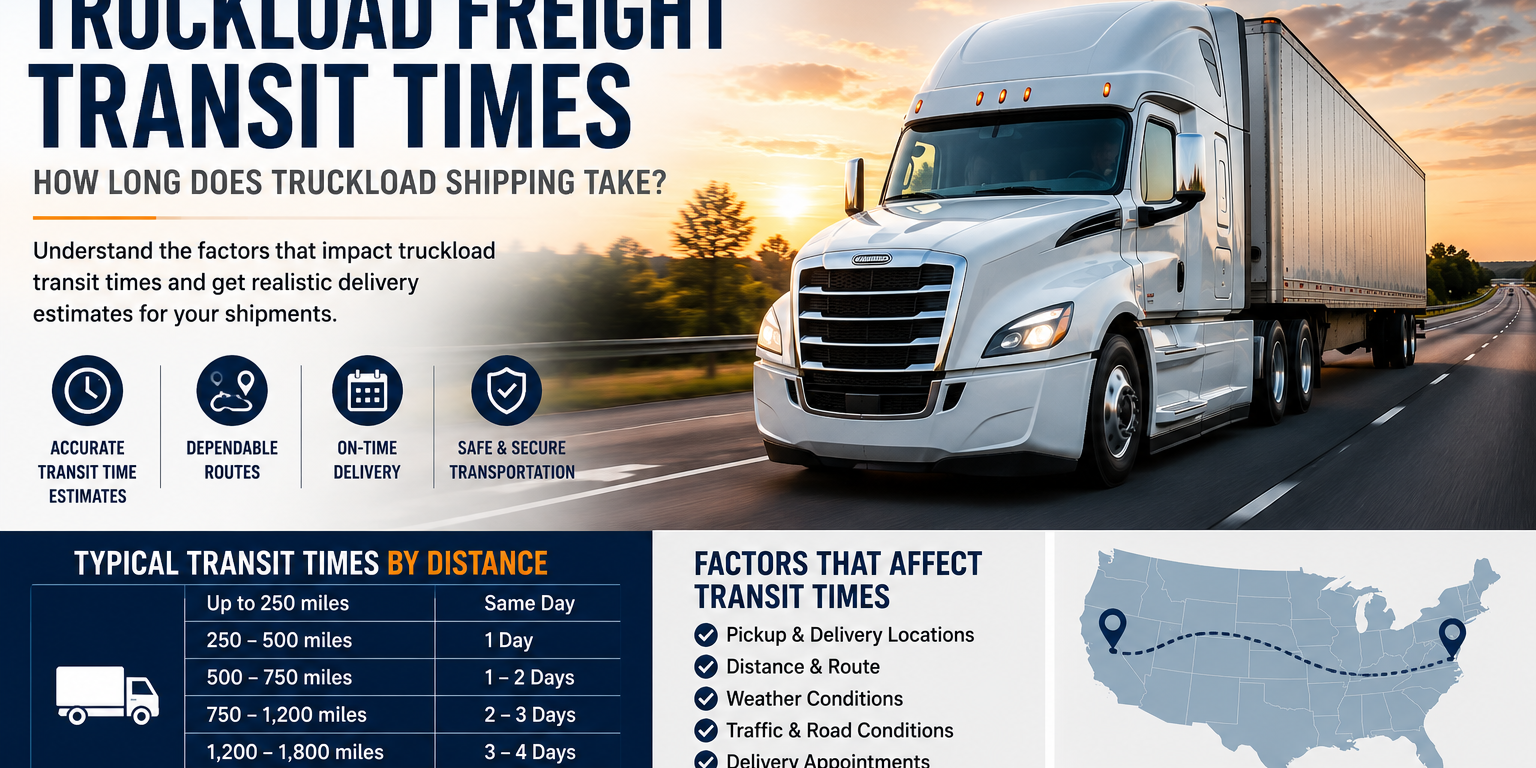
Truckload Freight Transit Times: How Long Does Truckload Shipping Take?
When requesting a truckload freight quote, one of the first questions shippers ask is:
“How long will it take for my freight to arrive?”
The answer depends on several factors, including the pickup and delivery locations, distance, weather, driver availability, appointment requirements, and federal Hours of Service regulations.
Unlike parcel shipments that often follow fixed delivery schedules, truckload freight transit times are influenced by real-world transportation conditions and operational planning. Understanding these factors helps businesses set realistic expectations and better plan their supply chain.
In this guide, we’ll explain what affects truckload shipping transit times, typical delivery timeframes, and how you can help ensure your freight arrives on schedule.
What Is a Truckload Freight Transit Time?
Truckload freight transit time is the estimated amount of time it takes for a shipment to travel from the pickup location to the final delivery destination.
Transit time begins once the freight has been loaded and the truck departs the shipper. It ends when the shipment is delivered and signed for by the receiver.
Transit times may be quoted in:
- Business days
- Calendar days
- Same-day service
- Next-day service
- Expedited service
- Appointment-specific deliveries
Average Truckload Transit Times
While every shipment is unique, the following estimates provide a general guideline for standard truckload freight.
| Distance | Typical Transit Time |
| Up to 250 miles | Same day |
| 250–500 miles | 1 day |
| 500–750 miles | 1–2 days |
| 750–1,200 miles | 2–3 days |
| 1,200–1,800 miles | 3–4 days |
| 1,800–2,500 miles | 4–5 days |
| 2,500+ miles | 5–7 days |
Actual transit times vary based on shipment requirements, appointment schedules, weather conditions, and driver availability.
Factors That Affect Truckload Transit Times
-
Distance
The longer the shipment travels, the longer the transit time.
However, distance alone does not determine delivery speed. A 300-mile shipment with difficult appointments may take longer than a 700-mile shipment with flexible scheduling.
-
Hours of Service Regulations
Commercial truck drivers must comply with Federal Motor Carrier Safety Administration (FMCSA) Hours of Service regulations.
These rules limit:
- Daily driving hours
- Weekly driving hours
- Required rest periods
These safety regulations are an important part of planning realistic transit schedules.
-
Pickup Time
The time your freight is ready for pickup can affect the delivery schedule.
For example:
- Early morning pickup
- Afternoon pickup
- Evening pickup
An early pickup may allow the driver to cover more miles on the first day than a late-afternoon pickup.
-
Delivery Appointments
Many warehouses require scheduled delivery appointments.
Even if the truck arrives early, it may need to wait until its assigned appointment before unloading.
Appointment availability often has a greater impact on delivery timing than driving distance.
-
Weather
Severe weather can delay truckload shipments.
Examples include:
- Snowstorms
- Hurricanes
- Flooding
- Heavy rain
- Ice
- High winds
- Wildfires
Safety always takes priority over speed.
-
Traffic Conditions
Traffic congestion can significantly affect transit times, especially in major metropolitan areas.
Examples include:
- New York City
- Chicago
- Los Angeles
- Atlanta
- Dallas
- Miami
Construction projects, accidents, and special events may also create delays.
-
Multiple Stops
Truckload shipments with multiple pickup or delivery locations naturally require more transit time than direct shipments.
Additional stops may include:
- Loading
- Unloading
- Driver paperwork
- Appointment waiting
- Route adjustments
-
Equipment Type
Some specialized equipment requires additional planning.
Examples include:
- Liftgate trailers
- Flatbeds
- Step decks
- Refrigerated trailers
- Oversized equipment
Equipment availability can influence both pickup scheduling and transit time.
-
Border Crossings
International truckload shipments into or out of Canada or Mexico may require additional customs processing, inspections, and documentation.
These factors should be considered when planning transit schedules.
-
Seasonal Shipping Demand
Transit times may be affected during busy shipping periods such as:
- Holiday season
- Produce season
- Retail inventory replenishment
- Trade show season
- Construction season
Booking transportation early during peak seasons often improves scheduling flexibility.
Same-Day Truckload Shipping
Some shipments qualify for same-day delivery.
Same-day truckload service is often available when:
- Pickup and delivery are within the same region
- Dedicated equipment is used
- Freight is ready when the truck arrives
- Delivery appointments are available
Dedicated truckload service is commonly used for time-sensitive freight requiring the fastest possible transit.
Expedited Truckload Shipping
Expedited truckload service prioritizes speed over cost.
Also, Expedited shipments may include:
- Emergency inventory
- Manufacturing shutdowns
- Medical equipment
- Trade show freight
- Critical replacement parts
- Time-sensitive retail shipments
These shipments are typically assigned dedicated equipment and prioritized scheduling.
Dedicated Truckload Transit Times
Dedicated truckload shipments often move faster than freight sharing equipment with other customers.
Benefits include:
- Direct transportation
- No intermediate terminals
- No freight transfers
- Fewer handling points
- Reduced risk of delays
Dedicated service is ideal for businesses that require maximum reliability.
How to Reduce Truckload Transit Times
Although some factors cannot be controlled, shippers can often improve transit performance by:
- Booking transportation early
- Having freight ready before pickup
- Providing accurate shipment information
- Using flexible delivery appointments when possible
- Confirming dock availability
- Avoiding unnecessary stops
- Responding quickly to transportation updates
- Working with experienced transportation providers
Proper planning can significantly reduce avoidable delays.
Common Causes of Delays
Truckload shipments occasionally experience delays because of:
- Severe weather
- Heavy traffic
- Road closures
- Mechanical breakdowns
- Driver Hours of Service limits
- Appointment changes
- Incorrect addresses
- Freight not ready
- Warehouse congestion
- Loading delays
Many of these issues can be minimized with proactive communication and careful planning.
Frequently Asked Questions
How long does truckload freight shipping usually take?
Transit time depends on distance, appointments, weather, traffic, and federal driving regulations. Local shipments may be completed the same day, while cross-country shipments typically require several days.
Is truckload shipping faster than LTL?
In many cases, yes. Dedicated truckload shipments generally travel directly from pickup to delivery without passing through multiple freight terminals, which can reduce handling and transit time.
Can I request same-day truckload delivery?
Yes. Same-day truckload service may be available for regional shipments depending on distance, equipment availability, and pickup time.
What can delay a truckload shipment?
Common causes include severe weather, traffic congestion, warehouse delays, appointment scheduling, equipment availability, and Hours of Service regulations.
Can expedited truckload service reduce transit time?
Yes. Expedited truckload shipments receive priority scheduling and often use dedicated equipment to reduce delivery time whenever possible.
How accurate are estimated transit times?
Transit estimates are based on current shipment information and normal operating conditions. Unexpected events such as weather, traffic incidents, or appointment changes may affect the final delivery schedule.
Do delivery appointments affect transit time?
Yes. Even if a truck arrives early, it may need to wait until its scheduled appointment before unloading if the receiver requires appointments.
How can I help ensure on-time delivery?
Provide accurate shipment details, have freight ready for pickup, communicate any special requirements in advance, and work with an experienced transportation provider to minimize delays.
Final Thoughts
Understanding truckload freight transit times helps businesses better plan inventory, production schedules, customer deliveries, and transportation budgets.
While no carrier can eliminate every delay, choosing the right transportation solution, providing complete shipment information, and planning ahead can significantly improve delivery performance.
Whether you’re shipping across town or across the country, understanding the factors that influence transit times will help you make informed shipping decisions and set realistic expectations.
Contact MO Trucking Inc.
If you need a truckload freight quote, dedicated transportation, cross-docking, final-mile delivery, or help planning your next shipment, our team is ready to assist.
MO Trucking Inc.
Email: Eric@motruckinginc.com
Phone: 631-755-5858
Text or After-Hours: 516-250-4480
Whether you’re shipping a single truckload or managing ongoing freight, we’ll help you find the right transportation solution at a competitive rate. Contact us today to discuss your shipping needs and request a customized truckload freight quote.