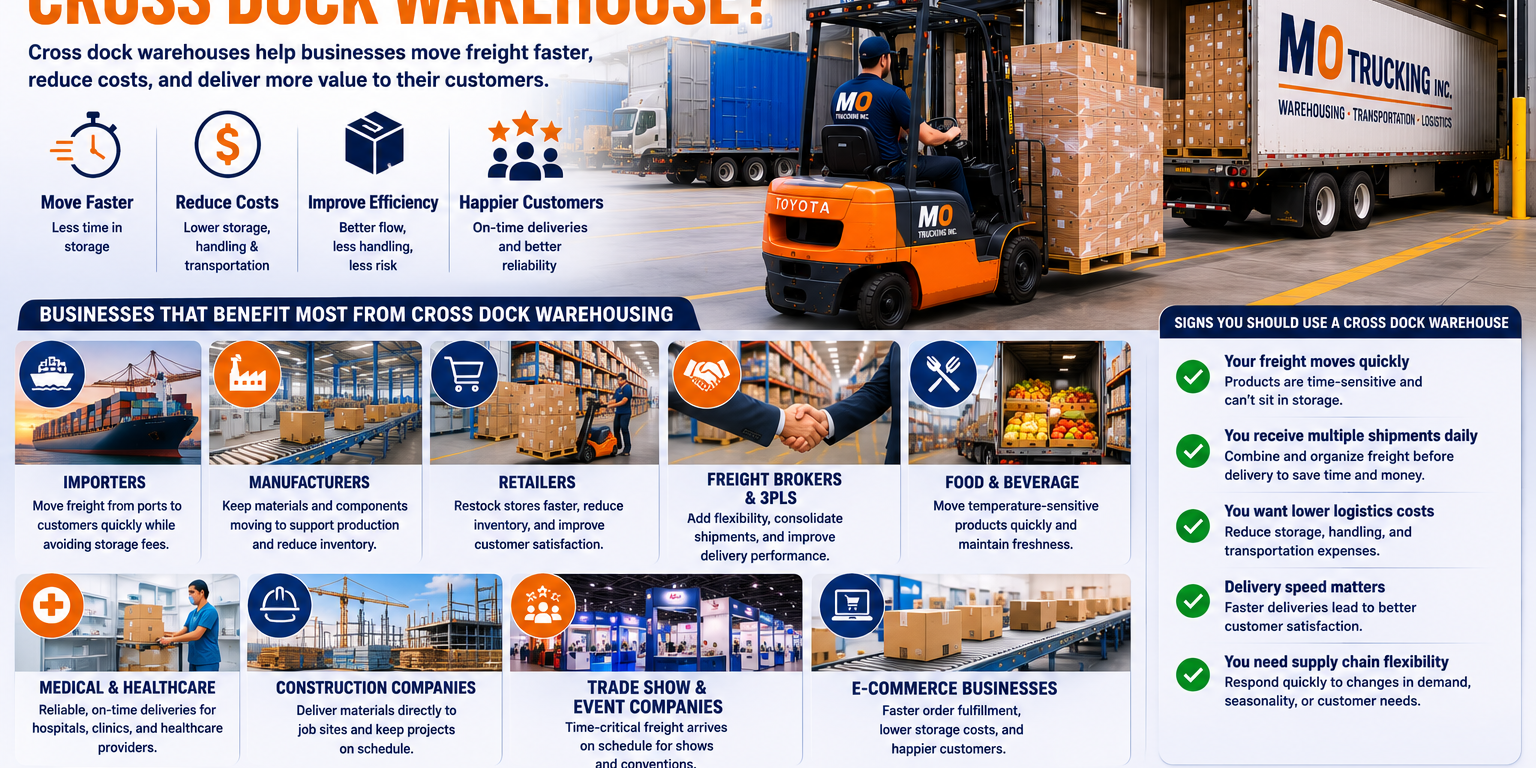
Who Should Use a Cross Dock Warehouse?
Every business has different logistics needs. Some companies need long-term inventory storage, while others simply need freight to move quickly from one truck to another. That’s where cross dock warehousing becomes one of the most valuable tools in modern logistics.
If you’re considering a Cross Dock Warehouse New York, understanding which businesses benefit the most can help determine whether cross docking is the right solution for your operation.
For companies focused on reducing transportation costs, improving delivery speed, and minimizing warehouse storage, cross docking can significantly improve supply chain performance.
What Is a Cross Dock Warehouse?
A cross dock warehouse is designed to move freight efficiently rather than store it.
Freight is typically:
- Received
- Inspected
- Sorted
- Consolidated when necessary
- Loaded onto outbound transportation
- Delivered
Instead of remaining in storage for days or weeks, shipments continue moving through the supply chain.
-
Importers
Importers are among the biggest users of cross dock warehouses.
After containers arrive at the Port of New York and New Jersey, freight can be:
- Unloaded
- Inspected
- Counted
- Consolidated
- Reloaded
- Delivered
This reduces storage charges while accelerating distribution.
-
Manufacturers
Manufacturers often receive components from multiple suppliers.
Cross docking allows incoming shipments to be quickly organized before moving directly to production facilities or customers.
Benefits include:
- Faster material flow
- Reduced inventory
- Lower warehouse costs
- Better production scheduling
-
Retailers
Retail stores frequently require fast replenishment.
Cross docking allows merchandise to move directly from inbound transportation to outbound delivery trucks, helping retailers:
- Restock shelves faster
- Reduce inventory
- Improve customer service
- Lower storage costs
-
Freight Brokers
Freight brokers often coordinate shipments between multiple carriers.
Cross dock warehouses provide flexibility by allowing freight to:
- Change trailers
- Be consolidated
- Be redistributed
- Meet scheduled delivery appointments
-
Third-Party Logistics Providers (3PLs)
Many 3PL companies use cross dock warehouses to improve transportation efficiency without maintaining large warehouse inventories.
Cross docking helps 3PLs provide:
- Faster deliveries
- Lower logistics costs
- Better customer service
- Improved transportation management
-
Food & Beverage Companies
Many food distributors move products that require rapid delivery.
Cross docking reduces warehouse time while helping maintain product freshness.
-
Medical & Healthcare Suppliers
Hospitals and healthcare providers often need shipments delivered quickly.
Cross docking helps ensure:
- Faster deliveries
- Reduced handling
- Better inventory availability
- Improved reliability
-
Construction Companies
Construction materials often move directly to job sites.
Cross dock warehouses help:
- Consolidate deliveries
- Schedule shipments
- Reduce job site delays
- Improve project timelines
-
Trade Show & Event Companies
Trade show freight typically moves on strict schedules.
Cross docking allows exhibit materials to arrive, transfer quickly, and continue to convention centers without unnecessary storage.
-
E-Commerce Businesses
Online retailers depend on fast shipping.
Cross docking helps e-commerce companies:
- Improve order fulfillment
- Reduce warehouse costs
- Increase inventory turnover
- Deliver products faster
Signs Your Business Should Use a Cross Dock Warehouse
Cross docking is often the right solution if:
- Your freight moves quickly.
- You don’t need long-term storage.
- You receive multiple shipments daily.
- Transportation costs are increasing.
- Delivery speed is important.
- Inventory turns over rapidly.
- You want fewer handling events.
Frequently Asked Questions
Is cross docking only for large companies?
No. Businesses of all sizes benefit from faster freight movement and lower warehouse costs.
Which industry uses cross docking the most?
Importers, retailers, manufacturers, freight brokers, and 3PL providers are among the largest users.
Can cross docking lower transportation costs?
Yes. Cross docking improves trailer utilization, reduces storage, and minimizes freight handling.
Does cross docking improve customer service?
Absolutely. Faster deliveries and improved reliability lead to happier customers.
Is cross docking good for seasonal businesses?
Yes. It helps businesses handle spikes in freight volume without increasing warehouse storage.
Final Thoughts
Cross dock warehousing isn’t limited to one industry. Any business that needs to move freight quickly while reducing storage and transportation costs can benefit from cross docking.
From importers and retailers to manufacturers and freight brokers, cross dock warehouses help create faster, more efficient supply chains that improve customer service while reducing logistics expenses.
Ready to Improve Your Logistics?
If you’re interested in learning how cross docking can benefit your business, Request a Free Quote and our logistics specialists will recommend the best solution for your freight.
Have questions about warehouse services or transportation? Contact Our Warehouse Team today.