Dry Van vs. Flatbed vs. Reefer: Which Trailer Is Right for Your Freight?
Choosing the right trailer is one of the most important decisions when shipping freight. The wrong equipment can lead to higher costs, shipping delays, cargo damage, or even an inability to transport your shipment.
The three most common trailer types used in truckload shipping are Dry Van, Flatbed, and Reefer (Refrigerated) trailers. Each is designed for different types of freight and transportation requirements.
In this guide, we’ll explain the differences between these trailer types, the advantages of each, and how to determine which one is best for your shipment.
What Is a Dry Van Trailer?
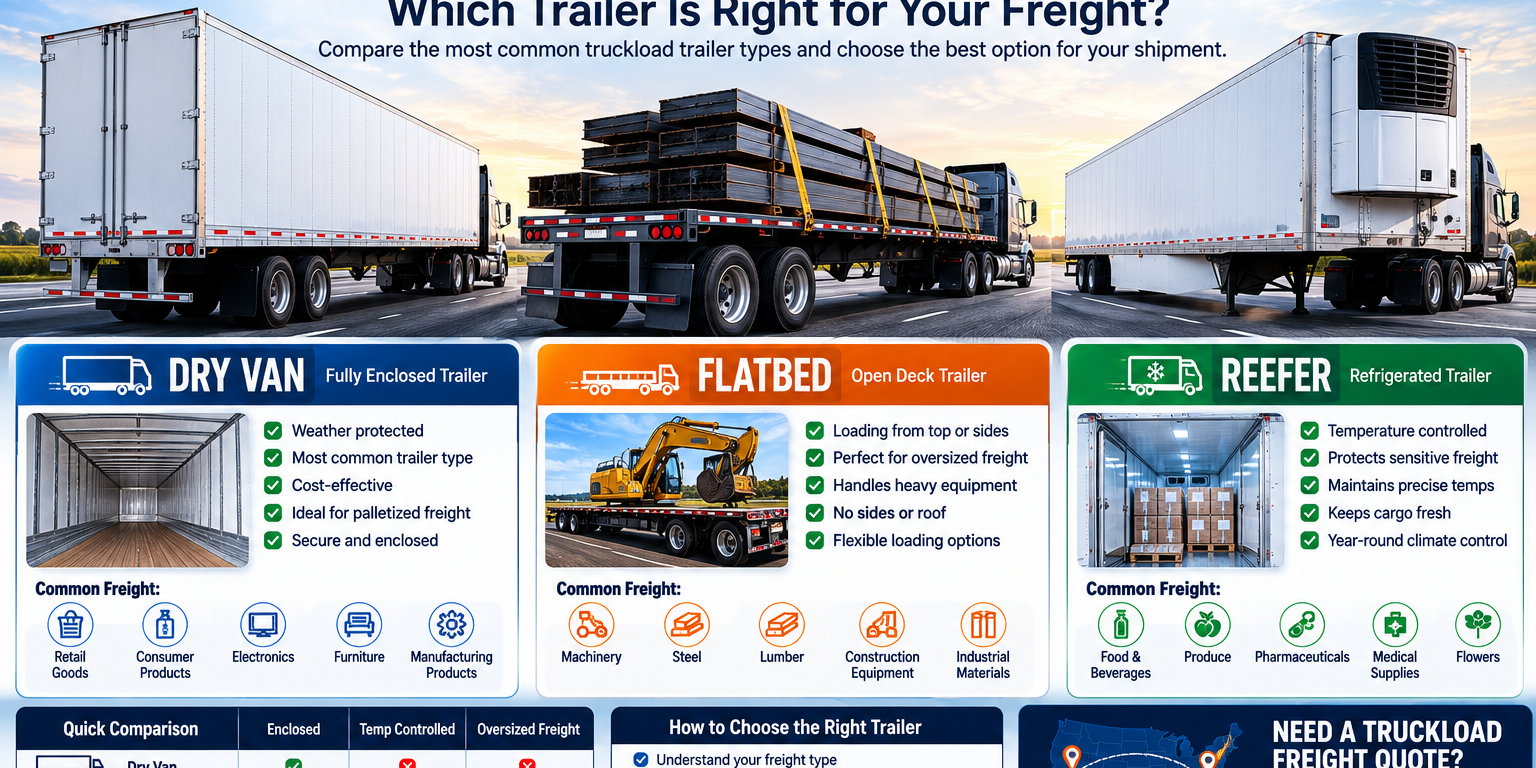
A Dry Van is the most commonly used trailer in the trucking industry. It is a fully enclosed trailer designed to protect freight from weather, road debris, and theft.
Dry vans are ideal for freight that does not require temperature control and can be loaded through the rear doors.
Common Dry Van Freight
- Palletized products
- Consumer goods
- Electronics
- Furniture
- Packaging materials
- Retail inventory
- Manufacturing products
- Industrial supplies
- Trade show exhibits
- General merchandise
Advantages of a Dry Van
- Fully enclosed protection
- Most widely available trailer type
- Cost-effective for general freight
- Suitable for most palletized shipments
- Lower transportation costs than specialized equipment
Limitations
- Cannot load from the sides or top
- Not suitable for oversized freight
- No temperature control
What Is a Flatbed Trailer?
A Flatbed Trailer has an open deck with no sides or roof, allowing freight to be loaded from any direction.
Flatbeds are used for freight that is oversized, unusually shaped, or too large to fit inside an enclosed trailer.
Common Flatbed Freight
- Steel
- Lumber
- Pipes
- Heavy machinery
- Construction equipment
- Building materials
- Concrete products
- Industrial equipment
- Generators
- Large fabricated parts
Advantages of a Flatbed
- Loading from the top, sides, or rear
- Accommodates oversized cargo
- Ideal for cranes and forklifts
- Excellent for heavy equipment
Limitations
- Freight is exposed to weather
- Cargo must be properly secured
- May require tarping
- Specialized securement requirements
What Is a Reefer Trailer?
A Reefer Trailer is a temperature-controlled trailer designed to keep freight within a specified temperature range throughout transit.
Despite the name, reefers can both cool and heat cargo depending on the shipment’s requirements.
Common Reefer Freight
- Fresh produce
- Frozen food
- Dairy products
- Pharmaceuticals
- Medical equipment
- Flowers
- Chocolate
- Beverages
- Chemicals
- Temperature-sensitive electronics
Advantages of a Reefer
- Temperature-controlled environment
- Protects sensitive freight
- Year-round climate management
- Reduces spoilage and product damage
Limitations
- Higher transportation costs
- Limited equipment availability
- Requires continuous refrigeration
- Increased fuel consumption
Quick Comparison
| Feature | Dry Van | Flatbed | Reefer |
| Enclosed | ✔ Yes | ✘ No | ✔ Yes |
| Weather Protection | ✔ Excellent | ✘ Limited | ✔ Excellent |
| Temperature Controlled | ✘ No | ✘ No | ✔ Yes |
| Oversized Freight | ✘ Limited | ✔ Excellent | ✘ Limited |
| Rear Loading | ✔ Yes | ✔ Yes | ✔ Yes |
| Side Loading | ✘ No | ✔ Yes | ✘ No |
| Top Loading | ✘ No | ✔ Yes | ✘ No |
| General Freight | ✔ Excellent | Limited | Limited |
| Food Products | ✘ No | ✘ No | ✔ Excellent |
When Should You Choose a Dry Van?
A Dry Van is usually the best choice if your shipment:
- Fits inside a standard trailer
- Does not require refrigeration
- Is palletized
- Needs protection from weather
- Is standard commercial freight
- Does not exceed legal dimensions
Dry vans are the most economical option for many truckload shipments.
When Should You Choose a Flatbed?
A Flatbed is often the best choice when your freight:
- Is oversized
- Is unusually shaped
- Requires crane loading
- Cannot fit through trailer doors
- Needs side or top loading
- Is construction or industrial equipment
When Should You Choose a Reefer?
A Reefer trailer is recommended if your shipment:
- Must remain frozen
- Must remain refrigerated
- Has strict temperature requirements
- Is food-grade
- Is pharmaceutical or medical cargo
- Can be damaged by excessive heat or cold
Factors to Consider Before Choosing a Trailer
Before requesting a truckload quote, consider:
- Freight dimensions
- Total shipment weight
- Commodity type
- Loading method
- Unloading method
- Weather conditions
- Temperature requirements
- Pickup location
- Delivery location
- Delivery appointments
Providing this information helps ensure the correct trailer is assigned.
Common Mistakes When Selecting Equipment
Many shipping issues occur because the wrong trailer was requested.
Common mistakes include:
- Booking a Dry Van for oversized freight
- Forgetting temperature requirements
- Not accounting for loading methods
- Underestimating freight dimensions
- Choosing a Flatbed when weather protection is required
- Forgetting liftgate requirements at pickup or delivery
Proper planning helps avoid delays and unexpected costs.
Frequently Asked Questions
What is the difference between a Dry Van and a Flatbed?
A Dry Van is an enclosed trailer that protects freight from weather and is designed for standard palletized cargo. A Flatbed is an open trailer used for oversized, heavy, or irregularly shaped freight that can be loaded from the sides or top.
What is a Reefer trailer?
A Reefer is a refrigerated trailer that maintains a controlled temperature during transportation. It is commonly used for food, pharmaceuticals, beverages, flowers, and other temperature-sensitive products.
Which trailer is the least expensive?
In most cases, Dry Vans are the most economical option because they are the most common trailer type and have the greatest equipment availability.
Can a Reefer trailer transport dry freight?
Yes. Reefer trailers can haul dry freight when temperature control is not required, although transportation costs may be higher than using a standard Dry Van.
Can Flatbed freight get wet?
Yes. Flatbed freight is exposed to the elements unless it is covered with tarps or other protective materials. Some freight is designed to be transported outdoors, while other cargo may require weather protection.
How do I know which trailer I need?
The correct trailer depends on your freight’s size, weight, loading method, and temperature requirements. An experienced transportation provider can help determine the best equipment based on your shipment details.
Do all trailer types have the same weight capacity?
While capacities vary by trailer and equipment, many standard truckload trailers are designed to haul up to approximately 45,000 pounds of cargo, subject to legal weight limits and proper weight distribution.
Can I ship trade show freight in a Dry Van?
Yes. Many trade show exhibits, booths, and display materials are transported in Dry Van trailers because they provide enclosed protection from weather and road debris.
Final Thoughts
Selecting the right trailer is essential for protecting your freight, controlling transportation costs, and ensuring a smooth delivery.
For most general freight, a Dry Van is the preferred choice. If your shipment is oversized or requires loading from the side or top, a Flatbed may be the better option. If your cargo must remain at a controlled temperature throughout transit, a Reefer is the right solution.
When you’re unsure which equipment best fits your shipment, working with an experienced transportation provider can help prevent costly mistakes and ensure your freight moves safely and efficiently.
Contact MO Trucking Inc.
If you need a truckload freight quote, dedicated transportation, cross-docking, final-mile delivery, or help selecting the right trailer for your shipment, our team is ready to assist.
MO Trucking Inc.
Email: Eric@motruckinginc.com
Phone: 631-755-5858
Text or After-Hours: 516-250-4480
Whether you’re shipping general freight, oversized equipment, or temperature-sensitive products, we’ll help you choose the right equipment and provide a competitive truckload freight quote tailored to your needs.