⚽🚛 2026 FIFA World Cup Trucking: How Freight & Logistics Will Power the Biggest Soccer Event in North America
🌎 The Global Logistics Challenge Behind the 2026 FIFA World Cup
The 2026 FIFA World Cup will be one of the largest sporting events in history. With matches taking place across the United States, Canada, and Mexico, millions of fans, thousands of vendors, and endless shipments of equipment will depend on one critical industry: trucking.
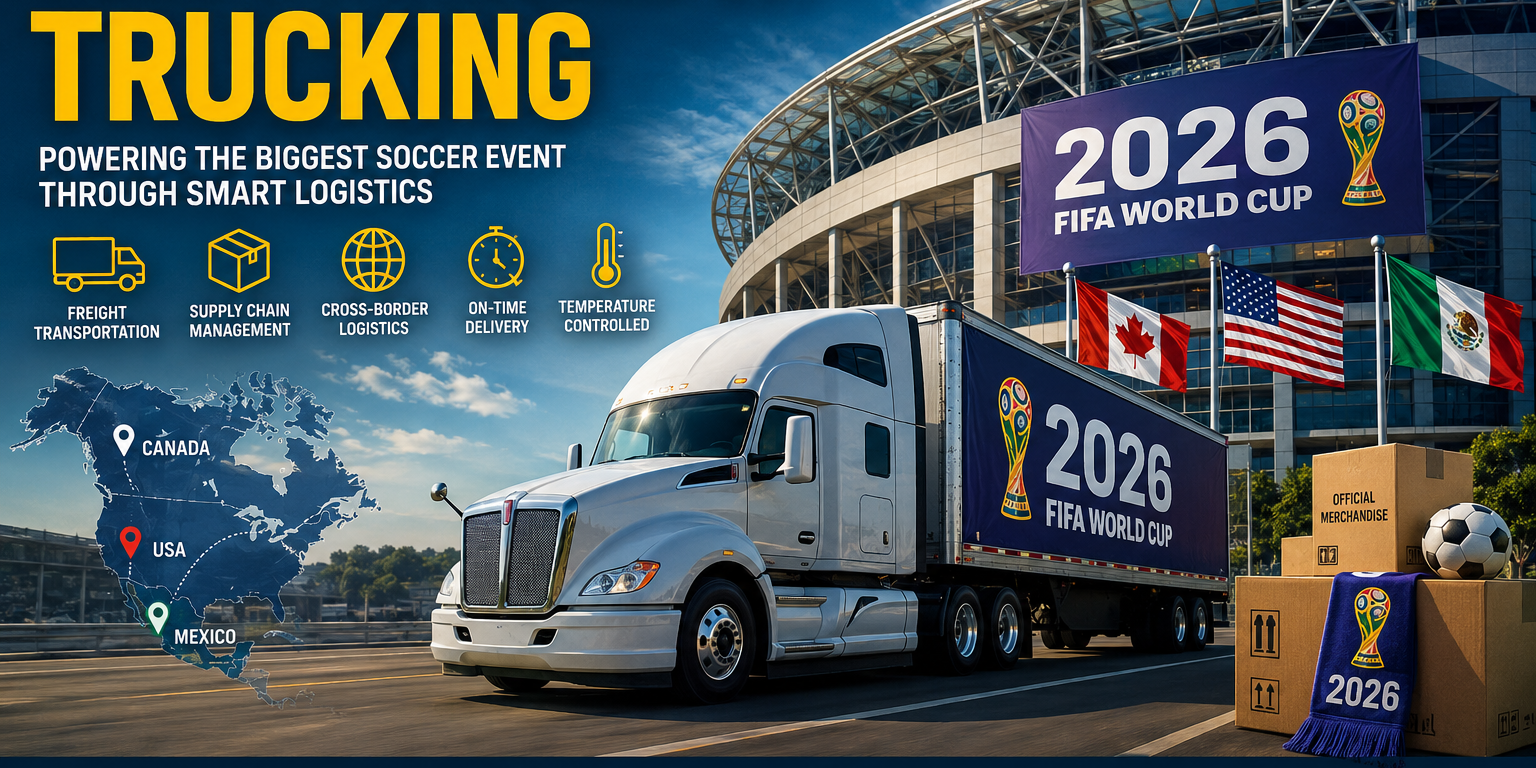
The rise of 2026 FIFA World Cup Trucking services is already creating major conversations throughout the transportation and logistics industry. From stadium construction materials to merchandise delivery and food distribution, trucking companies will play a vital role in keeping the tournament operational.
For freight providers and shippers, this event represents a massive opportunity to capitalize on increased demand for:
- FTL freight services
- sports event logistics
- truckload shipping solutions
- cross-border freight transportation
- time-sensitive freight delivery
- stadium supply chain management
- temperature-controlled freight
- expedited trucking services
- North American logistics
- event transportation management
🚚 Why Trucking Will Be Essential for the 2026 FIFA World Cup
Massive sporting events require nonstop freight movement. The 2026 FIFA World Cup is expected to break attendance records, which means transportation networks will be under enormous pressure.
The growth of 2026 FIFA World Cup Trucking demand will impact:
✅ Stadium construction projects
✅ Vendor supply chains
✅ Food and beverage deliveries
✅ Security equipment transportation
✅ Fan merchandise shipments
✅ Broadcasting equipment logistics
✅ Hotel and hospitality supply networks
Every venue will require coordinated truckload operations to ensure products arrive on time.
📦 Full Truckload Freight Will Surge During the Tournament
As the event approaches, full truckload shipping demand will increase dramatically across North America.
Industries likely to experience spikes include:
| Industry | Freight Needs |
| Food & Beverage | Refrigerated freight |
| Retail Merchandise | High-volume truckload shipments |
| Construction | Heavy haul freight |
| Hospitality | Furniture & supply transportation |
| Media & Broadcasting | Expedited equipment shipping |
Many logistics analysts predict that 2026 FIFA World Cup Trucking could temporarily tighten freight capacity across major host cities.
🌟 Major Host Cities That Will Experience Freight Growth
The tournament will be hosted in several major metropolitan areas including:
- New York/New Jersey
- Los Angeles
- Dallas
- Atlanta
- Miami
- Kansas City
- Houston
- Toronto
- Mexico City
- Vancouver
Each location will require increased truckload freight capacity and coordinated regional logistics planning.
This makes 2026 FIFA World Cup Trucking one of the most important logistics discussions heading into 2026.
⛽ Fuel Costs and Freight Rates Could Rise
One major concern for shippers is freight pricing volatility.
Large events often create:
- Higher diesel demand
- Reduced truck availability
- Increased spot market pricing
- Regional congestion
- Driver shortages
As a result, freight rate fluctuations may become common during peak World Cup activity.
Companies planning shipments near host cities should consider:
✔ Booking capacity early
✔ Using dedicated freight providers
✔ Leveraging drop trailer programs
✔ Utilizing route optimization technology
❄️ Refrigerated Freight Will Be Critical
Millions of visitors will create enormous food distribution demand.
This means temperature-controlled trucking will become essential for:
- Restaurants
- Stadium concessions
- Hotels
- Beverage distributors
- Grocery suppliers
The need for refrigerated transportation could create significant opportunities for carriers specializing in cold chain logistics.
Many experts believe 2026 FIFA World Cup Trucking will heavily depend on reefer fleets to maintain food supply reliability.
🌐 Cross-Border Freight Will Reach Record Levels
Since the World Cup spans three countries, cross-border logistics will become more complex than ever.
Carriers operating between:
- USA ↔ Canada
- USA ↔ Mexico
- Canada ↔ Mexico
will need expertise in:
- Customs documentation
- Border compliance
- International freight coordination
- NAFTA/USMCA transportation regulations
Cross-border carriers may see unprecedented demand during the tournament.
📈 How Shippers Can Prepare for the Freight Surge
To avoid supply chain disruptions, businesses should begin planning now.
Recommended Strategies
🚛 Secure Dedicated Capacity
Partner with reliable trucking providers before peak demand begins.
📅 Forecast Shipment Volumes Early
Analyze expected inventory increases tied to tourism and event traffic.
📍 Use Regional Warehousing
Position inventory closer to host cities.
⚡ Invest in Expedited Freight Solutions
Time-sensitive deliveries will become increasingly important.
📲 Leverage Real-Time Tracking
Modern visibility technology can help reduce delays.
🤖 Technology Will Transform Event Logistics
Modern logistics platforms will play a huge role in managing World Cup freight operations.
Emerging technologies include:
- AI route optimization
- Predictive freight analytics
- Real-time GPS visibility
- Digital freight matching
- Automated dispatch systems
These tools will help carriers manage the increased complexity of 2026 FIFA World Cup Trucking operations.
🚦 Traffic Congestion Could Impact Delivery Times
One of the biggest challenges carriers will face is urban congestion.
Host cities are expected to experience:
🚧 Road closures
🚧 Security checkpoints
🚧 Increased commuter traffic
🚧 Limited parking access
🚧 Stadium perimeter restrictions
This makes advanced route planning absolutely essential for freight carriers.
💼 Opportunities for Trucking Companies
The World Cup could generate billions in transportation demand.
Potential opportunities include:
- Dedicated event freight
- Merchandise distribution
- Retail replenishment
- Hospitality logistics
- Temporary warehousing
- Last-mile delivery services
Carriers that prepare early may gain long-term customers from partnerships formed during the event.
🏆 Final Thoughts
The 2026 FIFA World Cup will reshape transportation and supply chain operations across North America.
As freight demand rises, 2026 FIFA World Cup Trucking will become one of the most important logistics sectors in the industry. Companies that prepare now can position themselves for major growth opportunities while avoiding costly disruptions.
Whether it involves FTL freight services, sports event logistics, or cross-border transportation, trucking companies will be the invisible backbone powering the world’s largest soccer tournament.
The countdown to 2026 has already begun — and the freight industry is preparing for one of the biggest logistics events in modern history.
🔗 Sources
- FIFA Official Website
https://www.fifa.com/fifaplus/en/tournaments/mens/worldcup/canadamexicousa2026 - American Trucking Associations
https://www.trucking.org - FreightWaves Logistics News
https://www.freightwaves.com - U.S. Department of Transportation
https://www.transportation.gov - CNBC Supply Chain Reports
https://www.cnbc.com/supply-chain/ - Transport Topics
https://www.ttnews.com - USMCA Trade Information
https://ustr.gov/trade-agreements/free-trade-agreements/united-states-mexico-canada-agreement - Supply Chain Dive
https://www.supplychaindive.com - DAT Freight & Analytics
https://www.dat.com - TruckingInfo
https://www.truckinginfo.com